This article contains affiliate links. If you book through them, I earn a small commission at no extra cost to you.
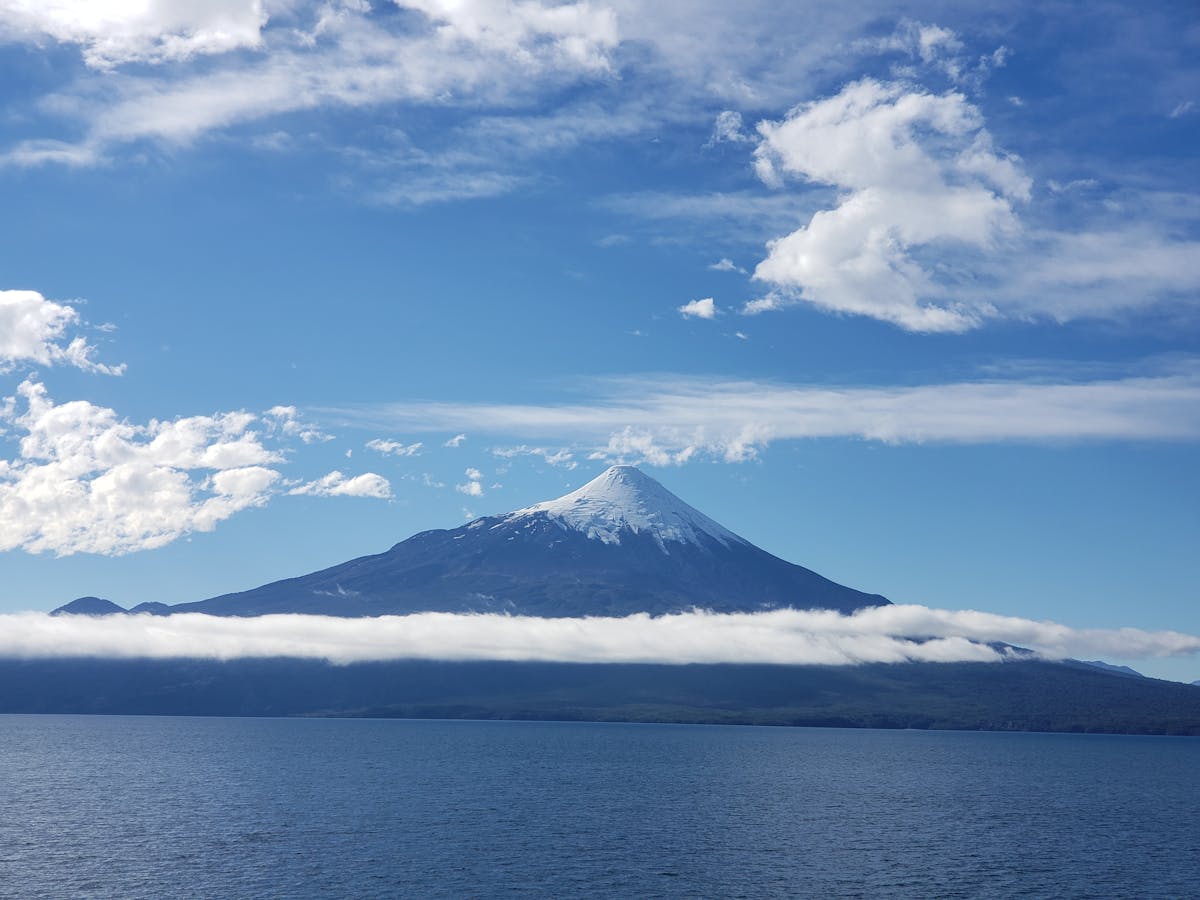
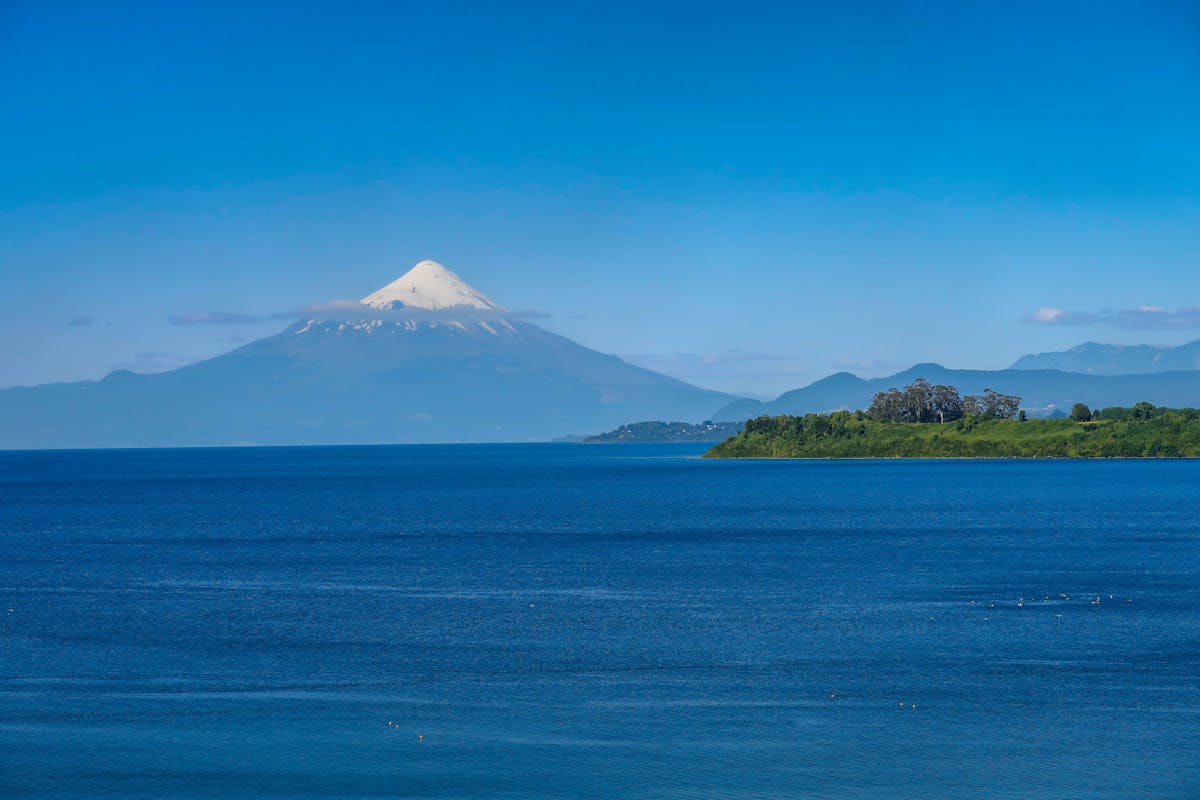
I came around a bend on the road from Puerto Montt, and there it was. Volcan Osorno — impossibly symmetrical, snow-covered, reflected so perfectly in Lago Llanquihue that I could not tell where the mountain ended and the water began. The bus was half empty. Nobody else seemed to react. I pressed my face against the window like a kid and stayed there for the next twenty minutes as the volcano slowly rotated in perspective, the lake shifting from dark blue to silver depending on where the clouds broke.
That first glimpse explains everything about Puerto Varas. This is a town that got extraordinarily lucky with its geography. Two volcanoes. A lake the size of a small sea. Waterfalls an hour away. A lake crossing to Argentina that feels like something out of a nineteenth-century expedition. And then, somehow, German bakeries. Everywhere. Selling kuchen that has no business being this good in southern Chile.
I spent four days in Puerto Varas and found myself constantly recalibrating. I had come expecting a smaller, quieter version of Pucon. What I got was something different entirely — less adrenaline, more texture. Less "adventure capital" and more the kind of place where you sit by the lake with a slab of raspberry kuchen and a flat white and think, yeah, I could stay here a while.
The Volcanoes That Frame Everything
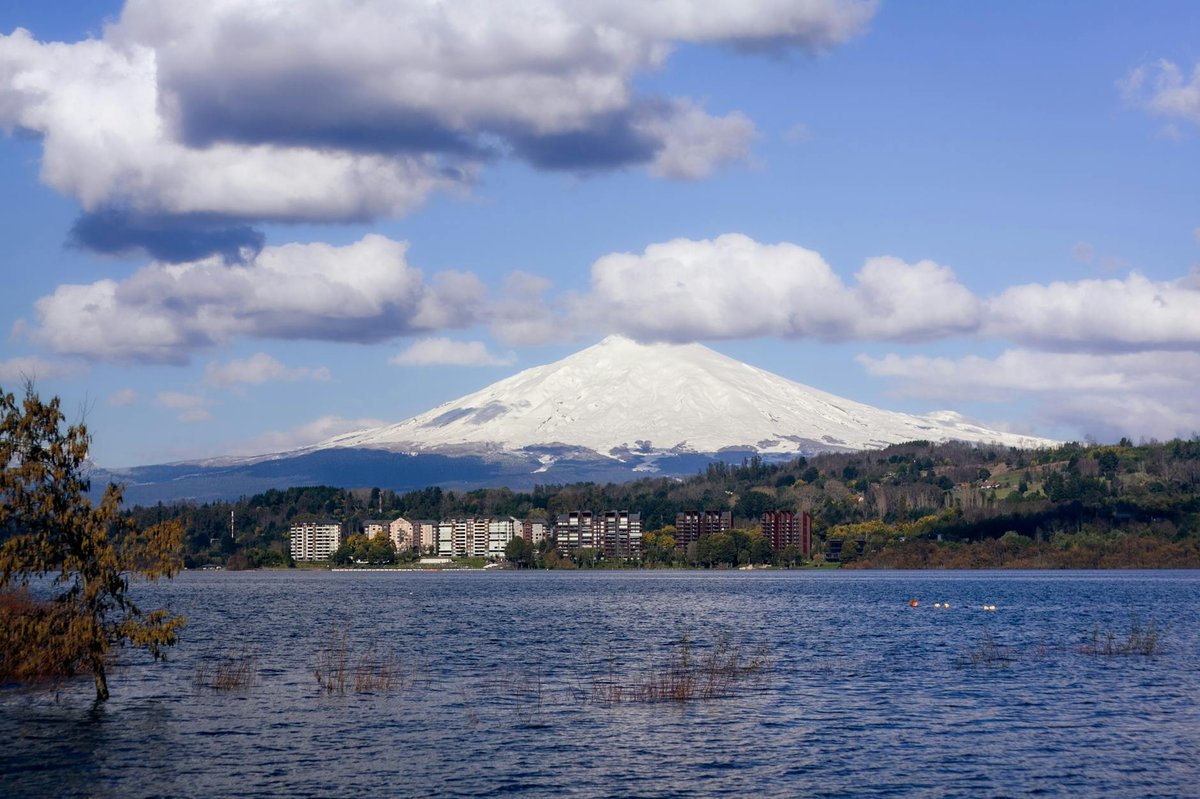
Puerto Varas sits on the western shore of Lago Llanquihue, and the view from basically anywhere in town includes at least one volcano. Osorno is the star — 2,652 meters of textbook stratovolcano, so perfectly cone-shaped that it looks fake. It dominates the northern shore of the lake and changes character completely depending on the light. Sunrise turns it pink. Midday makes it flat and postcard-generic. Late afternoon, when the clouds start stacking behind the summit, is when it becomes something else.
But I found myself looking south more than north. Calbuco sits behind the town, less symmetrical than Osorno, more ragged, more real. It erupted in 2015 — violently, with almost no warning — and the town evacuated in hours. People in Puerto Varas still talk about the ashfall, the darkness at midday, the grit that got into everything for months afterward. You can see the scarred flanks from the lakefront. Calbuco does not get the postcards, but it earns the respect.
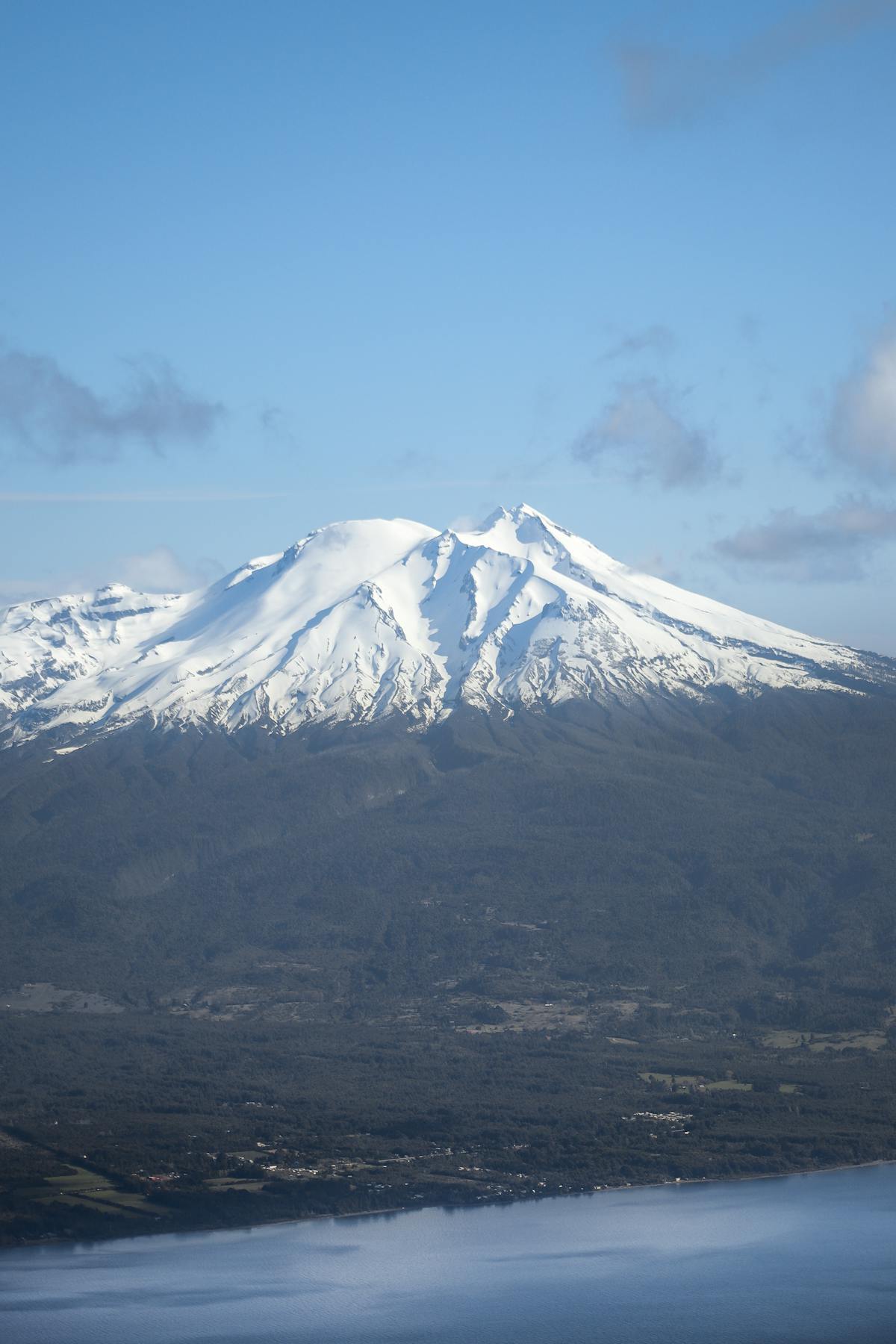
Together they create this constant geological drama. You are eating dinner and there are two volcanoes out the window. You are walking to the supermarket and there is a volcano at the end of the street. It never gets old, but it does become background — which says something about the rest of the town.
German Bakeries and the Kuchen Situation
The story goes like this: German immigrants arrived in the Lake District in the mid-1800s, looked at the green hills and cold lakes, and decided this was close enough to home. They built houses with steep roofs and window boxes. They planted orchards. And they brought their cake recipes.
A hundred and seventy years later, Puerto Varas is still German in a way that constantly catches you off guard. The church on the hill looks Bavarian. The street names mix Spanish and German. And the bakeries — the bakeries are everywhere, and they are serious about kuchen.
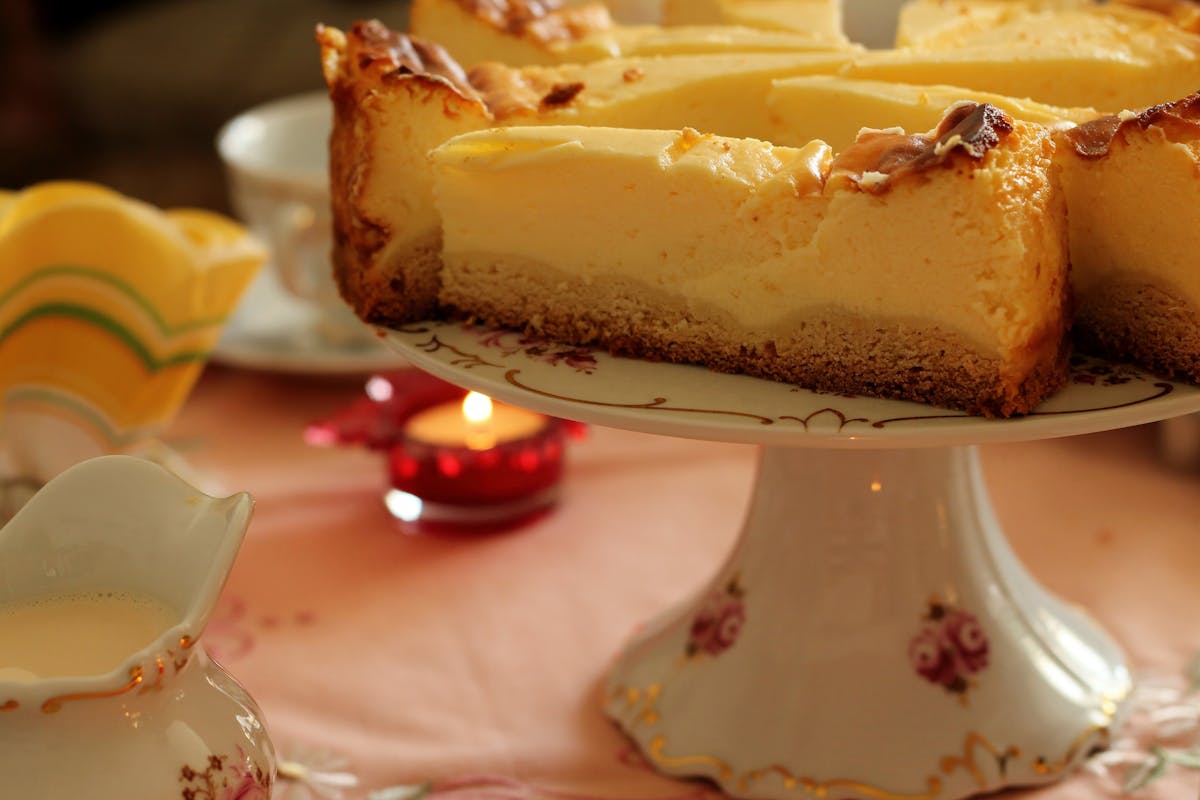
Kuchen here means a specific thing: a yeast-dough base topped with fruit and crumble, sometimes with a custard layer, baked until the top is golden and slightly crunchy. The fillings rotate seasonally — raspberry and blueberry in summer, apple and murta (a local berry that tastes like nothing else) in autumn. Every bakery has its version. Every local has their favorite bakery.
I tried four different places. The standout was a no-name spot on Calle San Jose where an older woman was pulling trays out of an oven that looked like it predated the town. Raspberry kuchen, still warm, with a crumble topping that shattered when you cut it. About 2,500 pesos a slice. I went back twice.
The fancier cafes along Del Salvador are fine — decent kuchen, good coffee, lake views. But they charge tourist prices (4,000-5,000 pesos per slice) and the kuchen sits in a display case all day instead of coming straight from the oven. If you want the real thing, walk a few blocks inland.
Quick Tip
Ask for kuchen de murta if it is in season (late summer through autumn). Murta is a wild berry that grows in the south and you will not find it anywhere north of Temuco. It tastes like a cross between strawberry and guava. Worth trying even if you do not normally care about regional fruit.
Petrohue — Waterfalls, Rapids, and the Best Day Trip in the Lake District
An hour northeast of Puerto Varas, inside Vicente Perez Rosales National Park, the Rio Petrohue does something visually absurd. Turquoise water — genuinely turquoise, not teal, not blue-green, actual turquoise — pours over black volcanic basalt formations, with Osorno rising directly behind. It looks like the kind of image that gets flagged as AI-generated. It is not. The color comes from dissolved volcanic minerals, and it is even more intense in person.
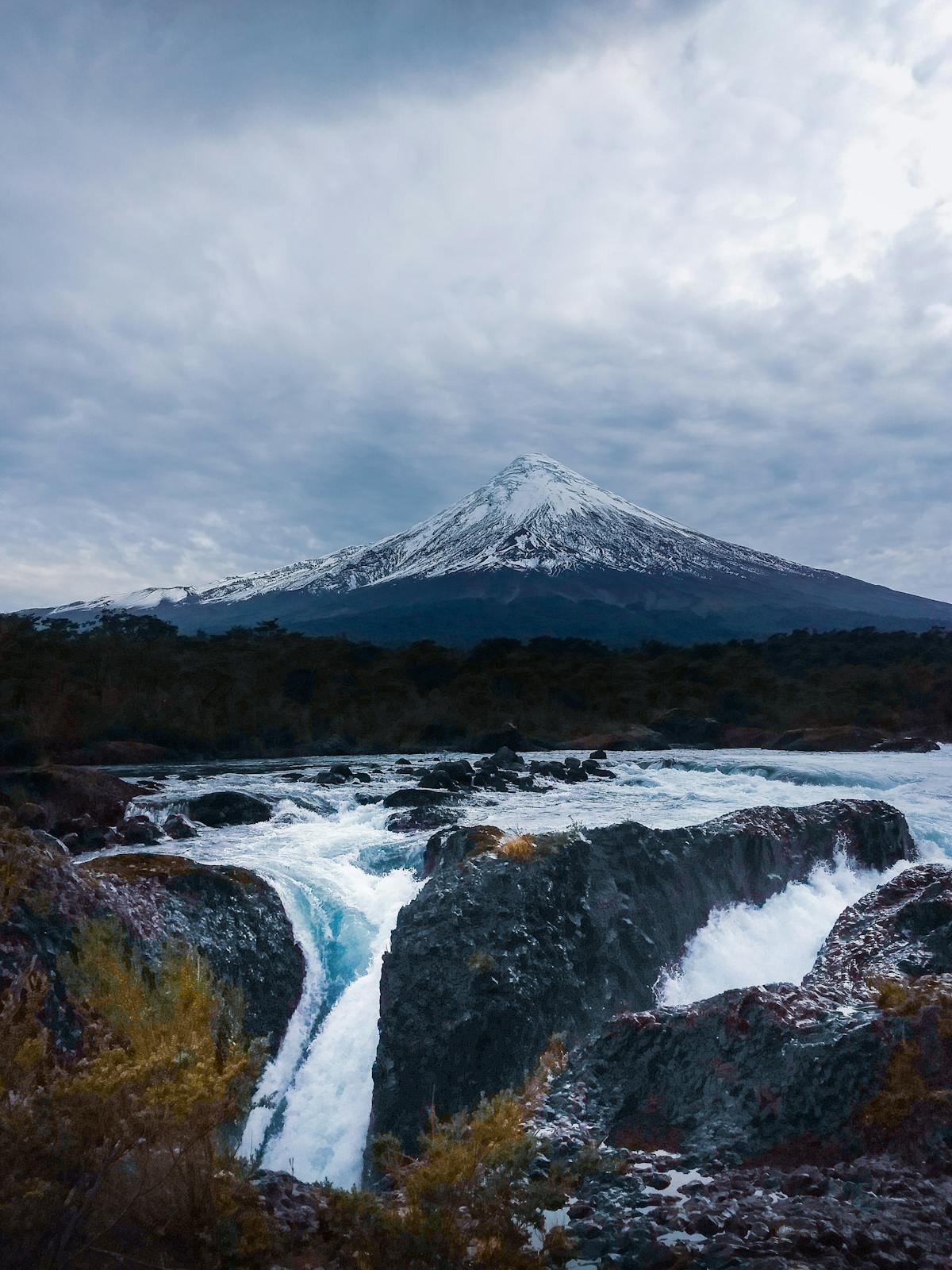
The Saltos del Petrohue (Petrohue Waterfalls) are the main attraction, accessible via a short paved walkway with several viewpoints. Entry is 5,000 pesos for foreigners, which felt steep for what is essentially a twenty-minute walk along boardwalks. But the falls themselves deliver. The water drops through channels carved into the basalt, creating dozens of smaller cascades that weave between rock pillars. I spent longer here than I expected because every angle revealed a different composition.
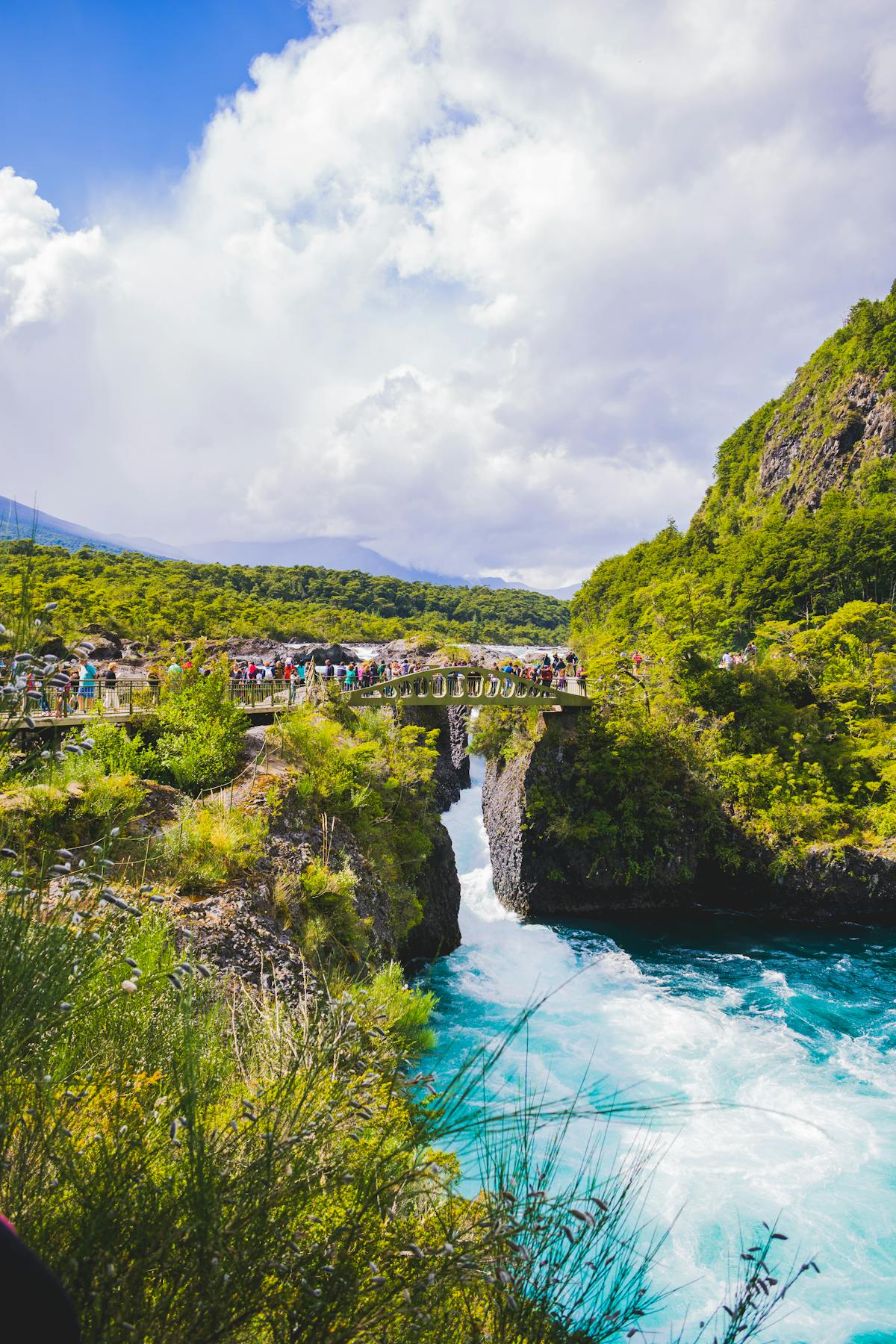
The better move is to combine the waterfalls with the Petrohue rapids upstream. You can rent kayaks near the put-in point and paddle through calmer sections of the river, or book a rafting trip that runs a Class III section with the volcano looming over your shoulder the entire time. I did the kayak option — about two hours on the water, $25,000 pesos — and it was the highlight of my time in the park. Paddling through water that color, with Osorno reflected in the calm stretches between rapids, felt like cheating at photography.
Quick Tip
Drive or take a colectivo instead of a tour bus. The tours from Puerto Varas spend 45 minutes at the waterfalls and then rush you to the next stop. With your own transport you can arrive early, linger, and combine it with Lago Todos los Santos at your own pace. Colectivos to Petrohue leave from the terminal on San Bernardo — about 4,000 pesos each way.
Lago Todos los Santos and the Lake Crossing to Argentina
Past the Petrohue waterfalls, the road ends at Lago Todos los Santos — another volcanic lake, this one deeper, darker, and bordered by denser forest than Llanquihue. The water is emerald green. The mountains drop straight into it. On a calm morning, the silence is so complete that you can hear the water lapping against the dock from a hundred meters away.
You can take a boat across Todos los Santos, which connects (via a bus, another lake, and another bus) all the way to Bariloche, Argentina. This is the famous Cruce de Lagos — the Andean lake crossing — and it is one of those travel experiences that sounds more romantic than it is. The scenery is spectacular, genuinely. Multiple volcanoes, waterfalls visible only from the water, forest so thick it looks black. But the logistics are grinding: twelve hours, three boats, two buses, two border crossings, and a price tag around $250-350 USD one way.
I did a half-day version instead — the boat across Todos los Santos to Peulla and back, without continuing to Argentina. About $40,000 pesos return. The ride takes ninety minutes each way, and the views from the boat are some of the best I saw in the entire Lake District. Volcan Tronador (3,491 meters, glaciated, perpetually smoking) appears on the right shore about halfway across. The boat is small enough that you can stand on the bow and feel like you have the lake to yourself.
Peulla itself is tiny — a hotel, a dock, a few trails into the forest. I walked a path along the river for an hour, ate a mediocre sandwich, and caught the boat back. It was enough. The lake is the point, not the destination.
Vicente Perez Rosales National Park Beyond the Waterfalls
Most visitors to Vicente Perez Rosales see the Petrohue waterfalls, take a photo, and leave. That is a mistake. Chile's oldest national park — established in 1926 — has trails that go deeper into temperate rainforest than almost anywhere else in the Lake District, and they are dramatically less crowded than anything near Pucon.
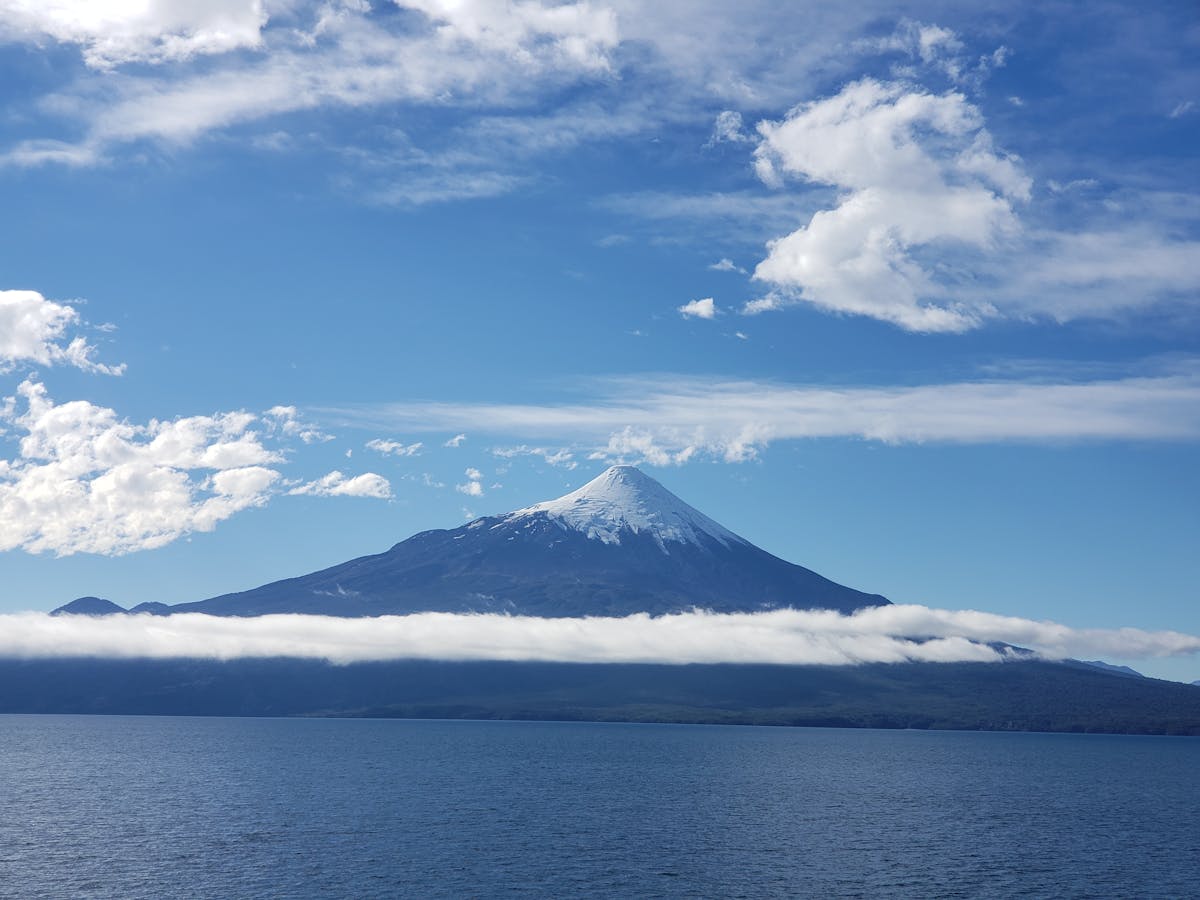
The Paso Desolacion trail is the one I would recommend if you have a full day and reasonable fitness. It is about 16 kilometers return, gains roughly 800 meters, and takes you through ancient alerce forest (southern Chile's equivalent of sequoia groves) up to a ridgeline with views across to Osorno, Calbuco, and Tronador simultaneously. I saw four other hikers the entire day. Four.
For something shorter, the Rincon del Osorno trail starts near the Petrohue waterfalls and does a loop through forest and lava fields in about three hours. The lava fields are eerie — black, cracked, dotted with pioneer plants that are slowly reclaiming the rock from Osorno's last eruption. It is a good morning hike before heading to the waterfalls or the lake.
Kayaking Lago Llanquihue
The lake is right there. It is 860 square kilometers. On calm mornings it looks like glass. And yet most visitors never get on the water. I almost made that mistake too — kayaking was not on my plan until a hostel owner talked me into renting a sit-on-top for a morning paddle.
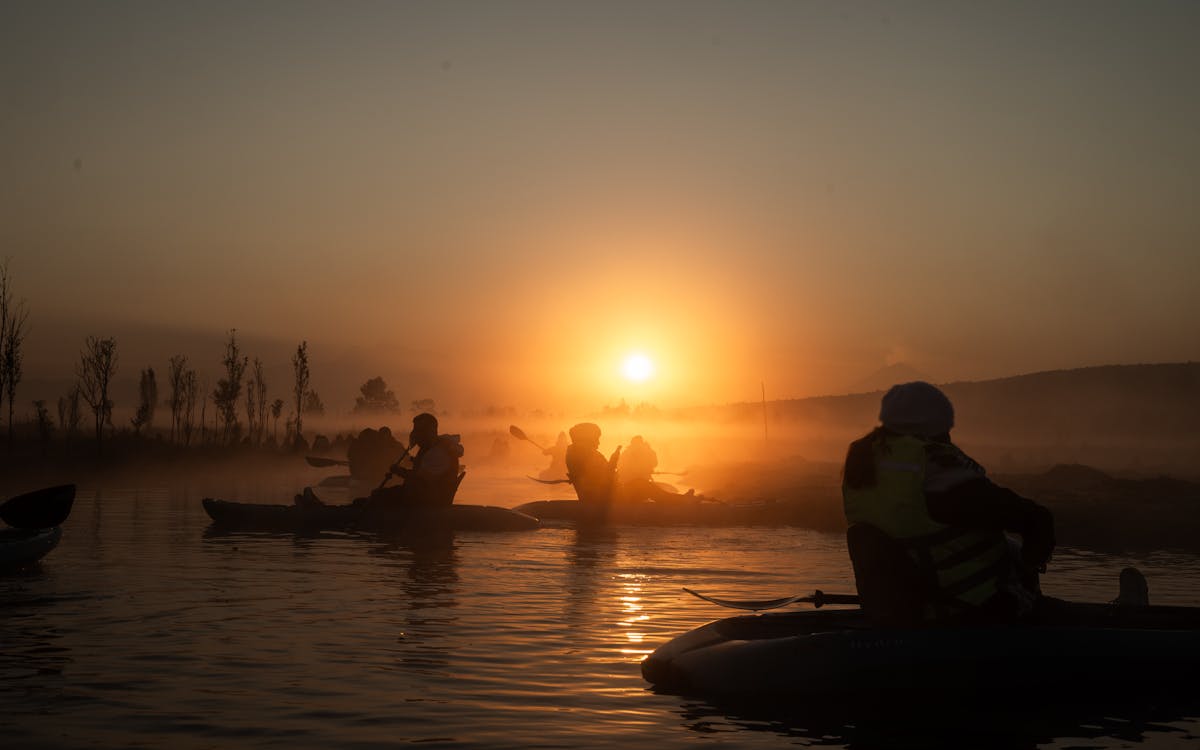
I launched from a small beach south of the town center at 7:30am. The lake was perfectly still. Osorno was reflected in the water ahead of me. Calbuco was behind. There was fog lifting off the surface in long, slow ribbons. I paddled north along the shore for about an hour, passed a few fishing boats, reached a rocky point where a family of coots was arguing about something, and turned back. Total distance: maybe five kilometers. But those two hours on the water, alone, with two volcanoes and absolute silence — that was maybe the best morning of the whole trip.
Rentals run about $8,000-12,000 pesos per hour from places near the Costanera. No experience needed for the sit-on-top kayaks, but check the wind forecast. When the afternoon thermals kick in, Llanquihue can get genuinely choppy, and you do not want to be a kilometer offshore in a rented kayak when whitecaps start forming.
Puerto Varas vs. Pucon — the Honest Comparison
People always ask which Lake District town to pick if you only have time for one. I have spent real time in both, and the answer depends entirely on what you want.
Pucon is louder, younger, more explicitly adventure-focused. It has the volcano climb, the rafting, the hot springs, the canyoning. The main street is lined with tour agencies competing for your money. The nightlife is real. If you are in your twenties and want to fill every day with adrenaline, Pucon is the move.
Puerto Varas is quieter, older (the average visitor skews mid-thirties and up), and more interested in scenery than stunts. The restaurants are better. The lakefront is prettier. The day trips — Petrohue, Todos los Santos, Chiloe, the Carretera Austral — are more varied. But there is no single headline activity that compares to climbing Villarrica.
My take: do both if your itinerary allows it. They are different enough that they do not feel redundant. But if you are choosing one and you have already done plenty of adventure travel, Puerto Varas is the more rewarding base. It is the kind of place where doing nothing — sitting by the lake with kuchen, watching the volcano change colors at sunset — feels like enough.
The Frutillar Day Trip (Do Not Skip This)
Frutillar is thirty minutes north of Puerto Varas along the lake, and it might be the prettiest small town in Chile. I almost skipped it. Glad I did not.
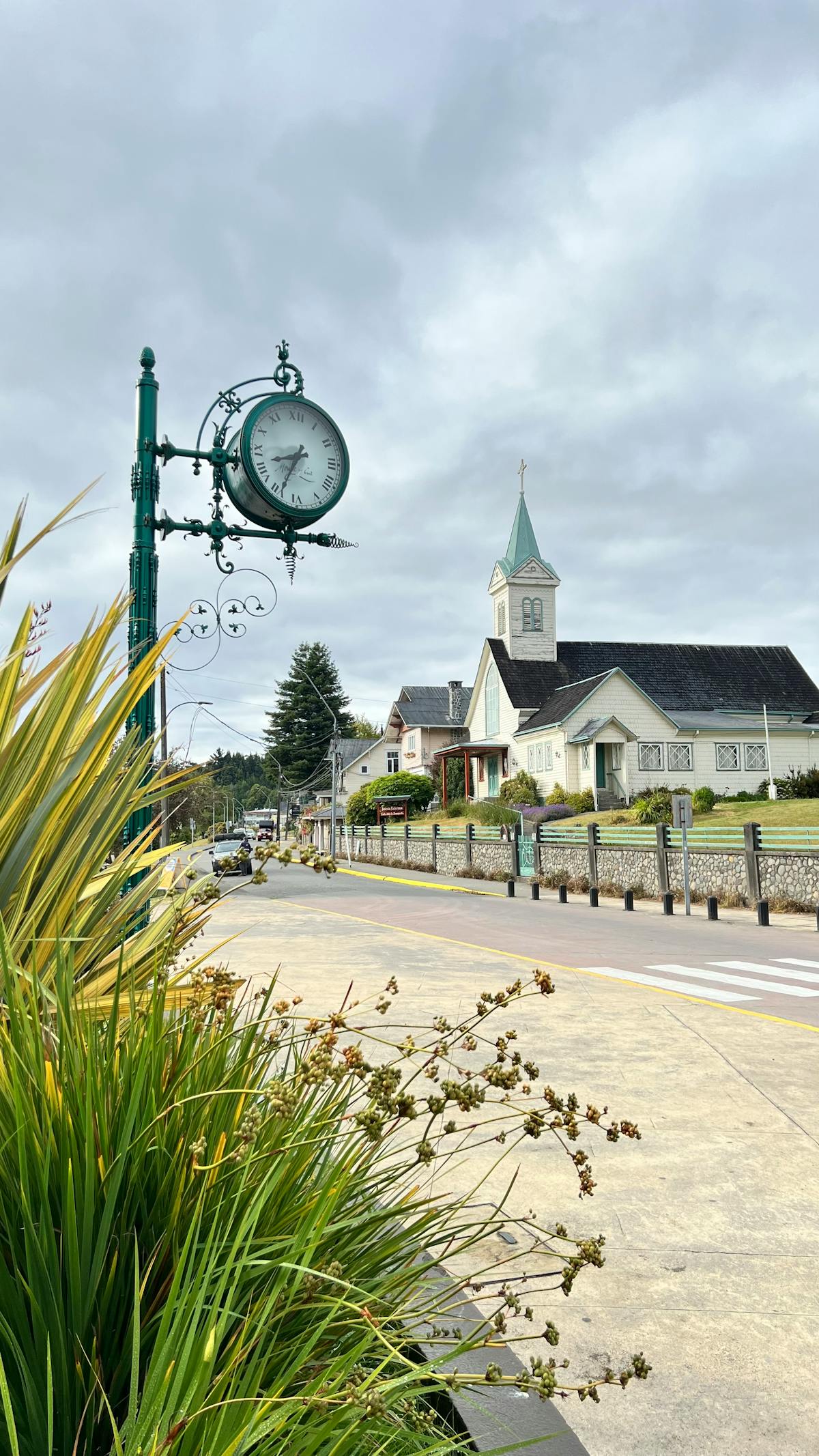
The German colonial influence is even stronger here than in Puerto Varas. The Museo Colonial Aleman is genuinely interesting — reconstructed homesteads, a working watermill, agricultural equipment from the 1850s settlers. It tells the story of families who crossed an ocean and then crossed the Andes to reach this spot, built houses from scratch, and planted the orchards that still produce fruit today. About 3,000 pesos entry.
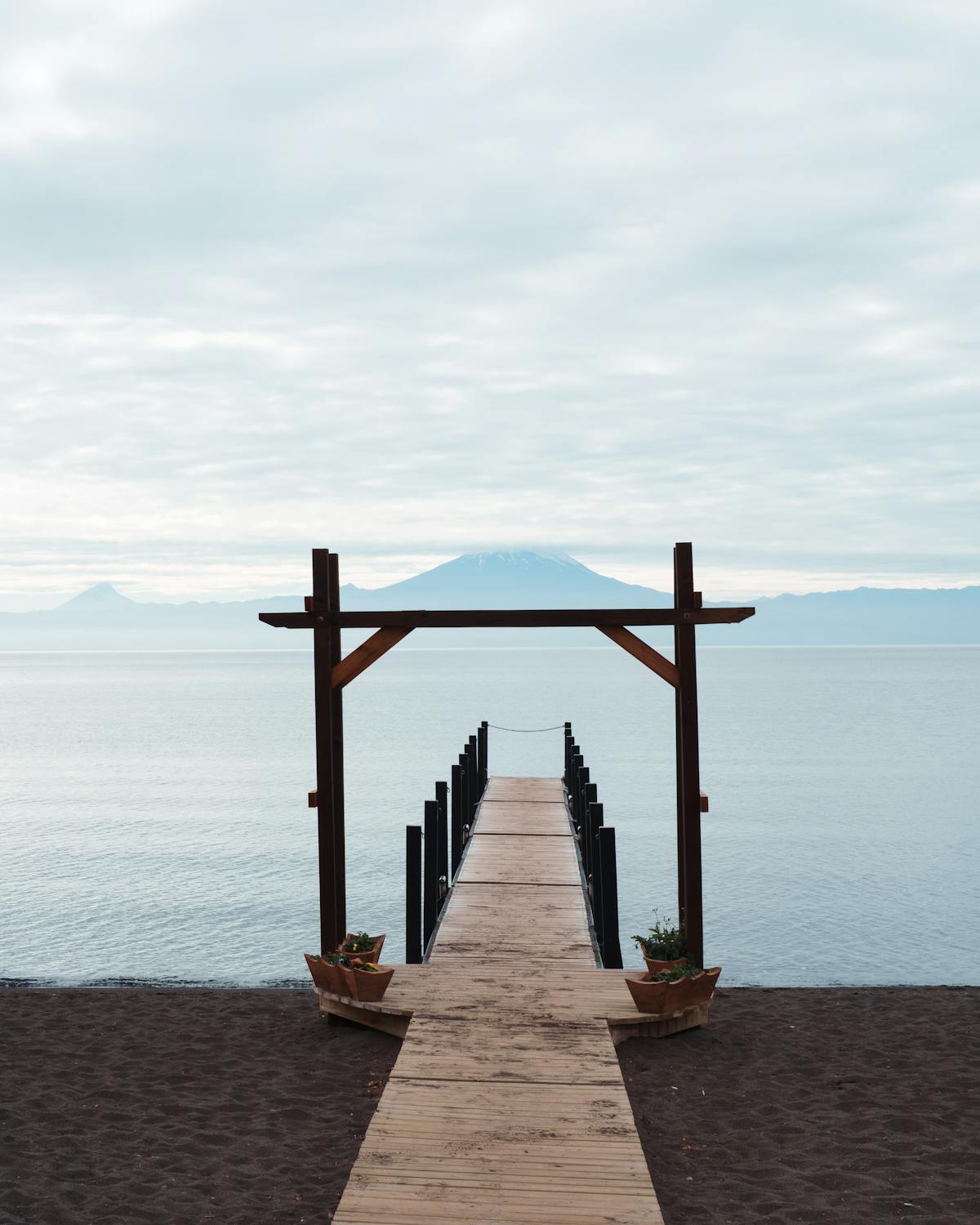
But the real reason to come is the lakefront. Frutillar's Costanera runs along a black sand beach with Osorno directly across the water, closer and more imposing than from Puerto Varas. The Teatro del Lago — a modern concert hall that looks like it was airlifted from Copenhagen — sits on the waterfront and hosts classical music performances through the summer. I caught an afternoon chamber concert almost by accident (tickets from $8,000 pesos) and it was brilliant — world-class acoustics in a building where the lobby windows frame the volcano.
Take a colectivo from Puerto Varas ($1,500 pesos, runs every fifteen minutes) and spend half a day. Walk the lakefront, visit the museum, eat kuchen (Frutillar's bakeries are arguably better than Puerto Varas's), and catch the late afternoon light on Osorno. You will be back in time for dinner.
The Casino, the Restaurant Scene, and Evenings
Puerto Varas has the Casino de Puerto Varas, and I mention it mostly because you will notice the building — it is enormous, modern, and sits right on the lakefront looking slightly out of place among the wooden houses. I wandered in one evening out of curiosity. Standard casino floor, decent bar, not particularly memorable. If you gamble, it is there. If you do not, the building at least has a good terrace bar with volcano views and cocktails around $6,000-8,000 pesos.
The restaurant scene is legitimately good — better than Pucon's, and probably the best between Santiago and the end of the road. Patagonian lamb, fresh-caught salmon from the lake, curanto (the traditional pit-cooked stew from Chiloe), and cerveza artesanal from a growing number of local breweries.
I ate at five or six places. The standout was a small restaurant on the Costanera that served grilled congrio (a local eel-like fish) with merkén-spiced potatoes that I still think about. Nothing fancy — checkered tablecloths, a handwritten menu, the owner serving tables. About $12,000 pesos for a main course. The upscale places along Del Salvador charge double for food that is only marginally better.
For drinks, the craft beer situation has gotten surprisingly good. At least three breweries operate within walking distance of the town center, most pouring IPAs and stouts that would hold up in any craft beer city. Expect $3,500-5,000 pesos per pint. The lakefront bars tend to mark up by 30-40 percent for the view — decide for yourself whether Osorno at sunset is worth the surcharge. (It probably is, once.)
When to Visit Puerto Varas
The Lake District seasons matter more here than in most of Chile. This is one of the wettest regions in the country, and the difference between a good-weather visit and a bad one is enormous.
December through March is the window. January and February are warmest (highs around 22-25 degrees Celsius) and driest, though "dry" is relative — you will still get rain. I was there in late January and had two perfect days, one overcast day, and one day of steady rain that I spent working through the bakery circuit.
November and April are shoulder months — fewer tourists, lower prices, but more rain and cooler temperatures. The lake is quieter and the volcano views, when they happen, feel more earned.
May through October is gray, wet, and cold. Some travelers love the atmosphere — fires, hot chocolate, empty lakefront. But many restaurants close, tours stop running, and you can go days without seeing Osorno through the clouds. The skiing season (June through September) brings a different crowd to the Osorno ski center, but the town itself hibernates.
Quick Tip
Check the weather forecast obsessively. Lake District weather changes fast — a rainy morning can turn into a perfect afternoon. If you wake up to clouds, do the bakery and museum stuff first and save the outdoor activities for whenever the sky opens.
Getting to Puerto Varas
Most people arrive via Puerto Montt, which has the nearest airport (El Tepual, PMC). LATAM and JetSMART run multiple daily flights from Santiago — about two hours, often under $50 USD if you book ahead on JetSMART. From the airport, it is a twenty-minute taxi or transfer to Puerto Varas. Expect $15,000-20,000 pesos for a taxi, or about $5,000 on the airport bus that stops at Puerto Varas on its way to Puerto Montt.
Long-distance buses from Santiago take roughly twelve hours overnight. Cruz del Sur and Tur Bus run the route daily. Semi-cama seats go for $25,000-35,000 pesos; full-cama (lie-flat) for $40,000-55,000. I took the overnight bus southbound and flew back. The bus is fine — you sleep, you arrive — but the flight is so cheap that the bus only makes sense if you enjoy the journey or hate airports.
From Pucon, buses run four or five times daily and take about five hours via Osorno. From Chiloe (Ancud or Castro), it is three to four hours including the ferry crossing at the Chacao Channel. Puerto Varas is also the starting point for the Carretera Austral — ferries and buses head south from Puerto Montt into the wilds of Aysen.
Where to Stay
The town is compact. Everything is walkable. Your two decisions are: lakefront or a few blocks inland, and what you are willing to pay.
Lakefront hotels run $80-180 USD per night for a double room with a volcano view. The view is real and it is good — waking up to Osorno is a particular kind of luxury. But the rooms themselves are not always worth the premium. Some of the lakefront properties are older and trade on location rather than quality.
Mid-range guesthouses inland run $40-70 USD and are often the better value. Several are in converted German-style houses with thick walls, wood stoves, and owners who cook breakfast from scratch. You lose the lake view from your window but gain it from a five-minute walk.
Hostels exist and cost $12-20 USD for a dorm bed. The backpacker scene is smaller than Pucon's — Puerto Varas draws more couples and families than solo travelers. But the hostels that do exist tend to be well-run, with kitchens, bike rentals, and staff who know the area cold.
| Lakefront hotel (double, volcano view) | $80-180/night |
| Guesthouse/B&B (inland, double) | $40-70/night |
| Hostel dorm | $12-20/night |
| Airbnb/cabin (2-4 people) | $50-120/night |
Quick Tip
Book ahead for January and February. Puerto Varas is a top destination for Chilean and Argentine summer vacationers, and the best-value places fill up weeks in advance. Shoulder season (November, March) is much easier — you can often walk in and negotiate.
The Lakefront at Golden Hour
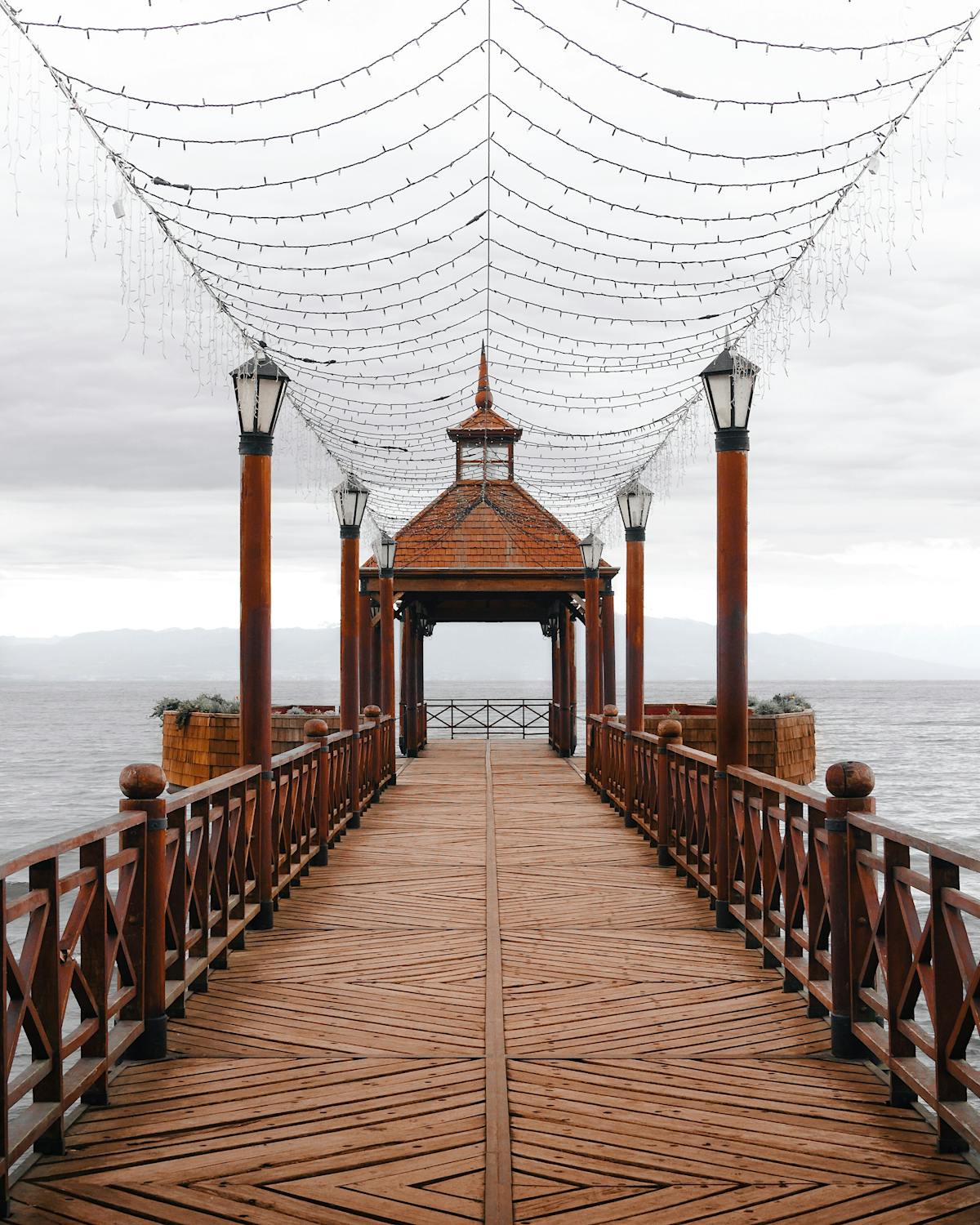
On my last evening, I walked the Costanera from the casino end to the pier near the fish market, which takes about twenty-five minutes at a slow pace. The sun was dropping behind Puerto Montt somewhere to the west, and the light was doing that thing where everything turns gold. Osorno was catching the last of it — the summit glowing while the rest of the mountain fell into shadow. A few kayaks were still out on the water. Someone was playing guitar near the pier. A dog was swimming after a stick, unsuccessfully.
It was not a dramatic moment. No volcano eruption, no death-defying hike, no once-in-a-lifetime wildlife encounter. Just a quiet evening in a small town that happens to sit in front of one of the most beautiful views on the continent. And that, more than any single activity or attraction, is the thing about Puerto Varas. It does not need to try hard. It just sits there, between its volcanoes and its lake and its kuchen, and lets you figure out that this is exactly where you want to be.