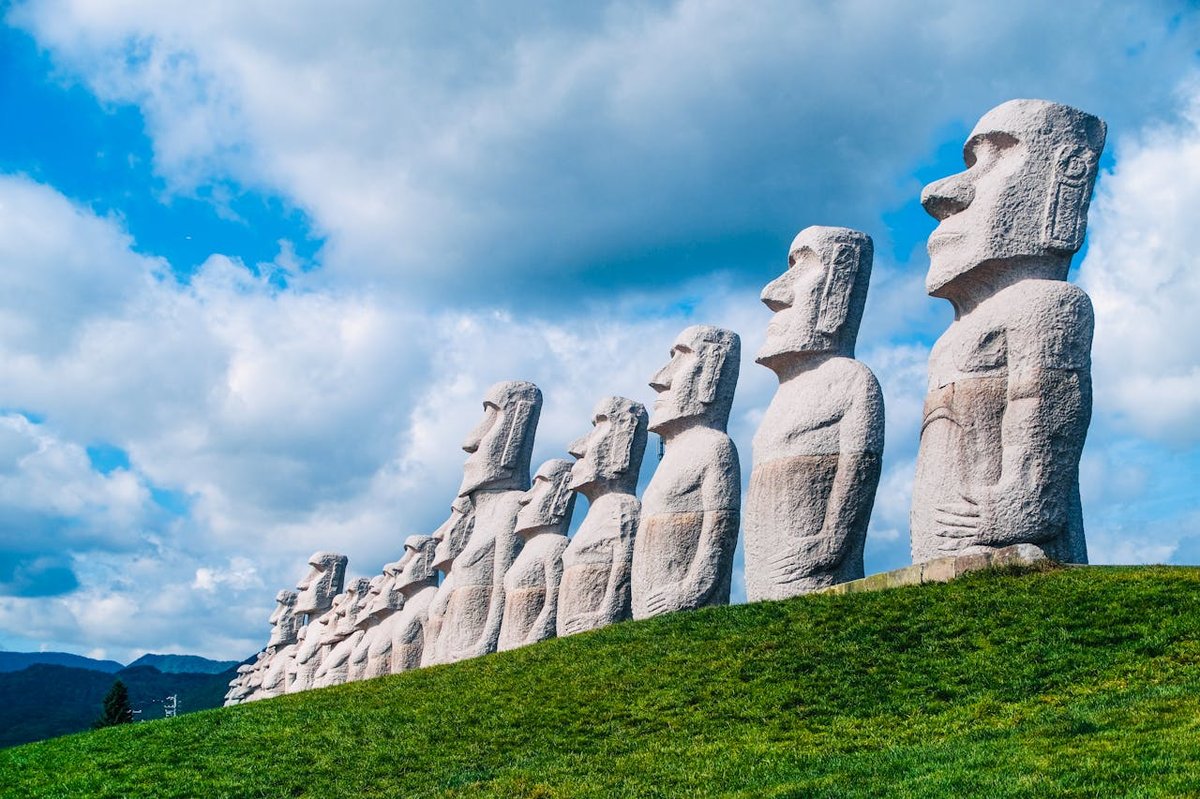
Easter Island — Rapa Nui in the Polynesian language of its inhabitants — floats in the Pacific 3,700 kilometers west of mainland Chile. It is one of the most isolated inhabited places on earth. About 8,000 people live here, most of them in the single town of Hanga Roa, surrounded by nearly a thousand moai statues carved from volcanic rock between the 10th and 16th centuries.
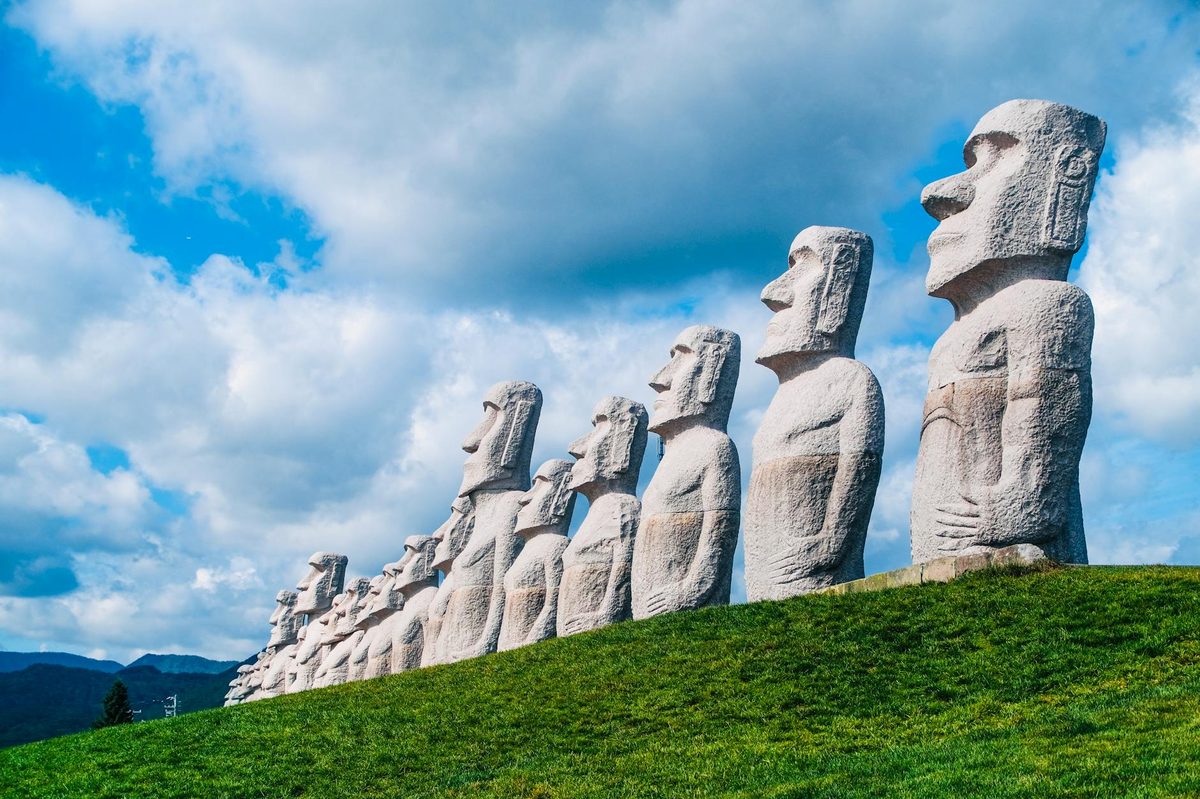
The Moai
Ahu Tongariki is the largest restored platform — fifteen moai standing in a row against the eastern sky. Come at sunrise when the light hits them from behind and the silhouettes are at their most dramatic. It is the most photographed site on the island for good reason.
Rano Raraku is the quarry where most moai were carved. Nearly 400 statues remain here in various stages of completion — some half-buried in the hillside, others lying face-down on the slopes, abandoned mid-transport centuries ago. Walking through the quarry is the closest you get to understanding the scale of what the Rapa Nui people attempted.
Ahu Akivi is the only platform where the moai face the ocean rather than inland. Seven statues in a line, said to represent the seven explorers sent by King Hotu Matu'a to find the island.
Ahu Vinapu has stonework so precisely fitted — no mortar, razor-tight joints — that Thor Heyerdahl used it as evidence for his theory of South American contact. The theory is largely discredited, but the craftsmanship remains impressive.
Beyond the Moai
Rano Kau is an extinct volcanic crater in the southwest corner, with a lake of totora reeds filling the caldera floor. The ceremonial village of Orongo sits on the crater rim — this is where the Birdman competition took place, an annual race where competitors climbed down the sea cliffs, swam to offshore islets, and returned with a sooty tern egg. The petroglyphs at Orongo are among the most detailed on the island.
Anakena Beach is one of two sandy beaches on the island — white sand, palm trees, warm water, and a restored ahu with seven moai behind the beach. It is where oral tradition says King Hotu Matu'a first landed.
The island is small enough to cycle in a day, though the hills and wind make it harder than the 24-kilometer circumference suggests. Renting a car or a motorbike gives more flexibility for reaching remote sites at the right time of day.
Rapa Nui Culture
The island is not a museum — it is home to a living Polynesian culture. The annual Tapati festival (usually February) features traditional competitions, dancing, woodcarving, and body painting. Even outside the festival, the Polynesian influence is everywhere: in the food (tuna and sweet potato feature heavily), the language (signs are bilingual in Spanish and Rapa Nui), and the music.
Practical Information
Getting there: LATAM flies from Santiago to Mataveri Airport (IPC) — about five hours. See our getting around guide for tips on booking domestic flights. Flights run daily in peak season, less frequently in winter. Book early; there is no alternative airline and prices spike during Tapati and Chilean summer holidays.
Park entry: All visitors must pay the Rapa Nui National Park fee (approximately $80 for foreigners). See our money and costs guide for more on budgeting. It covers entry to all archaeological sites for a set period. Some sites like Rano Raraku and Orongo can only be visited once per ticket.
Time needed: Three full days covers the major sites comfortably. Five days lets you revisit favorites at different times of day and explore the coastline.
When to go: Year-round, though January and February are warmest. See when to visit Chile for seasonal details. The island rarely gets cold — winter lows hover around 15°C — but it does get wet and windy from May through August.
Tip: Book Accommodation Early
Easter Island has limited lodging — mostly guesthouses and small hotels in Hanga Roa. There are no international chains. During peak season and Tapati, everything fills up weeks in advance. Many guesthouses include airport pickup (often with a flower lei welcome) and can arrange tours.