This article contains affiliate links. If you book through them, I earn a small commission at no extra cost to you.
The gas gauge was on the last bar. Not the warning light — past the warning light. The needle had entered unknown territory, somewhere between empty and prayer. The next station was in Gobernador Gregores, 83 kilometers away, and the wind was hitting the side of the car hard enough to add 20 percent to my fuel consumption. I turned off the air conditioning, the radio, the headlights. I drove at 70 km/h in a region where the limit is 110, drafting behind a truck full of sheep whenever possible. I made it with the engine sputtering into the station. The attendant looked at my face and laughed. "Todos hacen lo mismo," he said. Everyone does the same thing.
That was day four of driving through Patagonia. By then I had already dealt with a flat tire on gravel, a border crossing that took two hours because of a misunderstanding about a rental car, and wind so strong it literally pushed the car into the oncoming lane. And I would do every single minute of it again. Driving Patagonia is the best road trip I have done — but only because I survived it. This is everything I learned the hard way so you do not have to.
Renting a Car in Patagonia (and the Traps Nobody Warns You About)
First things first. You need a car, and this is where the headaches start before you have even turned a key.
The two main rental hubs in Patagonia are Punta Arenas on the Chilean side and El Calafate on the Argentine side. Punta Arenas has the better selection of agencies and generally lower prices. El Calafate is more convenient if you are flying in from Buenos Aires. Both have offices from the international chains — Hertz, Europcar, Budget — plus a handful of local agencies that are cheaper but come with trade-offs I will get to in a minute.
Budget a minimum of $60-80 USD per day for a basic SUV or crossover. You want high clearance. Not because every road requires it, but because the ones that do will ruin a sedan. I saw a Corolla on the road to El Chalten with both front bumper guards ripped off and the driver looked like he had been crying. Do not be that person. Get an SUV.
The Insurance Situation
The basic CDW (collision damage waiver) that comes with most rentals has a deductible of $1,500-3,000 USD. On gravel roads, "damage" means windshield chips, tire punctures, and underbody scratches — all of which count when you return the car. I paid the extra $15/day for zero-deductible coverage. On day three, a rock cracked the windshield. On day six, I got a flat. Without full coverage, those two incidents alone would have cost more than the entire rental.
Quick Tip
Check your credit card's travel insurance before you leave. Some premium cards cover rental damage abroad, but read the fine print — many exclude "unpaved surfaces," which rules out half of Patagonia.
One-Way Drops and the Cross-Border Problem
Most Chilean rental companies do not allow one-way drops in Argentina. Some do not allow the car into Argentina at all. The ones that do charge a cross-border fee of $200-400 on top of your rental, and you must still return the car to the same country.
The workaround: rent from an agency that explicitly allows Argentina travel (Europcar and Hertz both did when I went — confirm before booking). Do your loop and bring it back to Punta Arenas. Or rent separately on each side. Costs more total but avoids the cross-border drama.
For crossing with a rental car, you need an authorization letter from the rental company, plus passport, driver's license, and vehicle registration. The border agents check everything. Do not lose that letter.
The Roads: Ruta 40 vs. Carretera Austral (Two Very Different Animals)
Patagonia has two legendary driving routes, and they could not be more different.
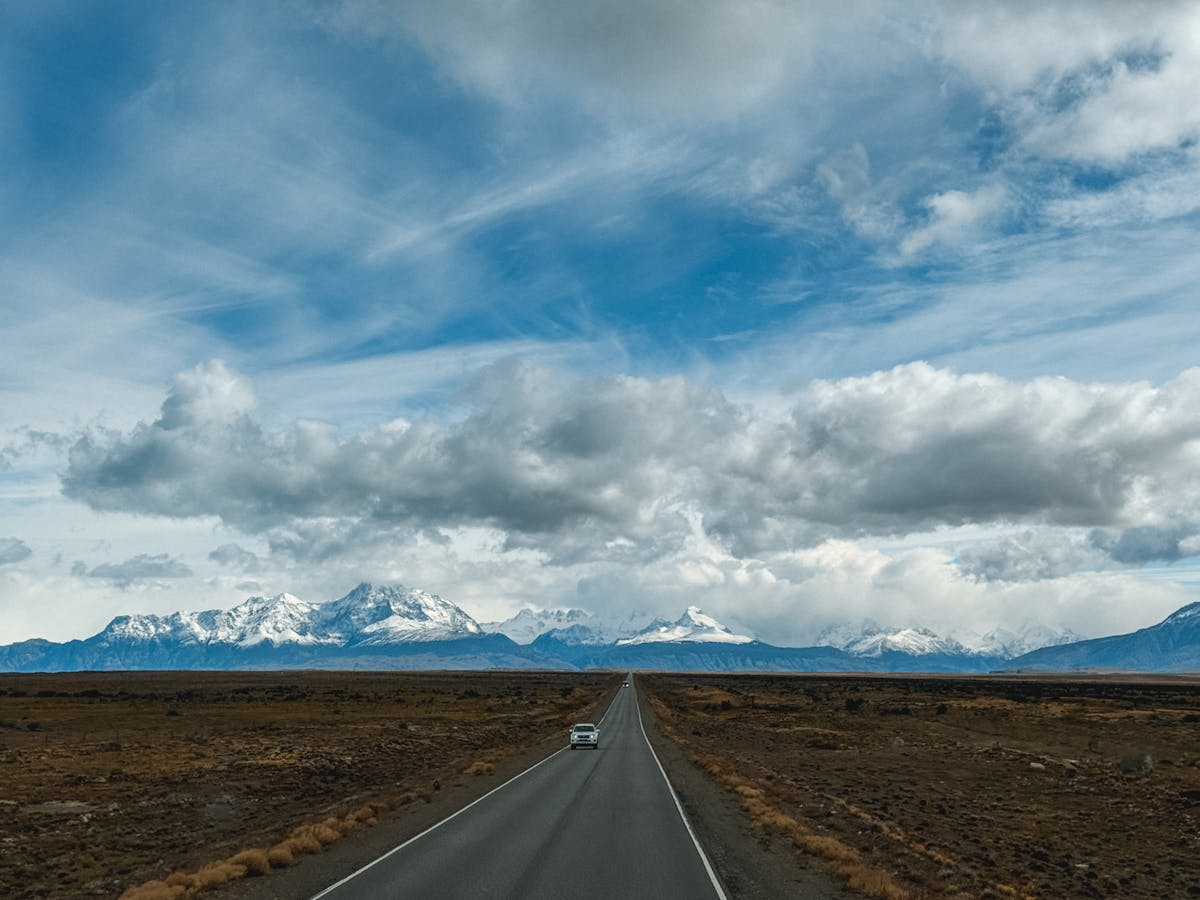
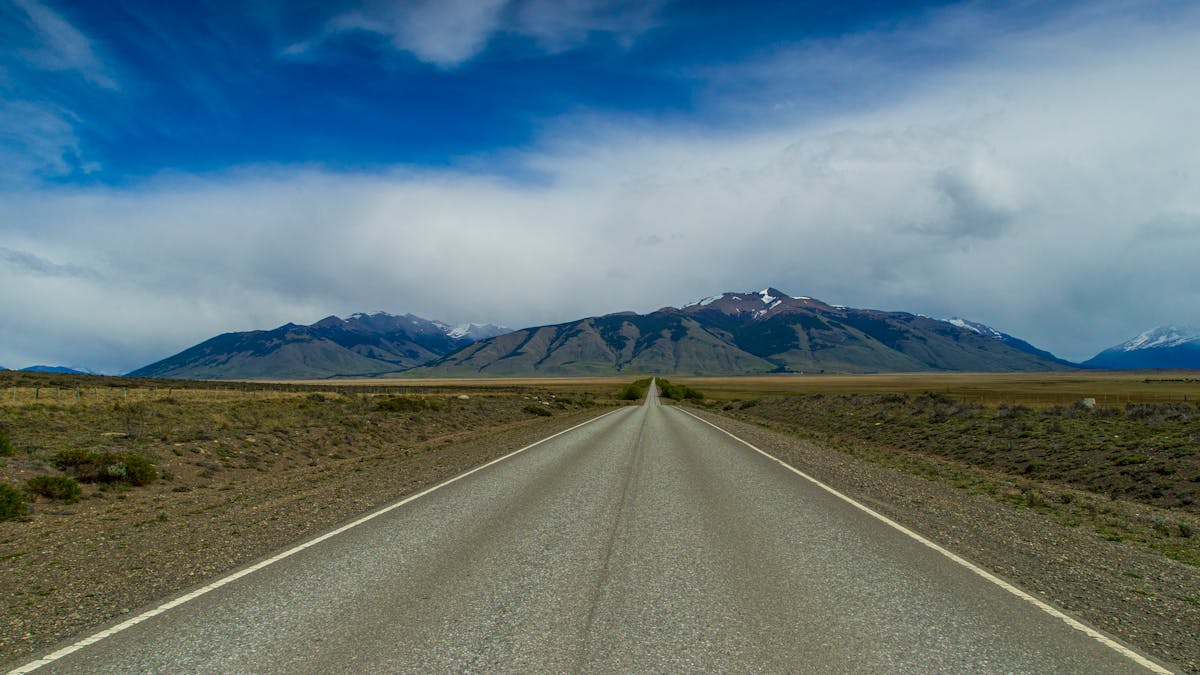
Ruta 40 runs the length of Argentina's western edge, from Mendoza all the way down to Cabo Virgenes near the Strait of Magellan. The Patagonian section — roughly from Bariloche to El Calafate — is about 1,600 kilometers of steppe, wind, and loneliness. Long straight stretches with nothing on either side but brown grass and the occasional guanaco. Gas stations can be 200-300 kilometers apart. Towns are small and spread thin. It is hypnotic and slightly terrifying in its emptiness.
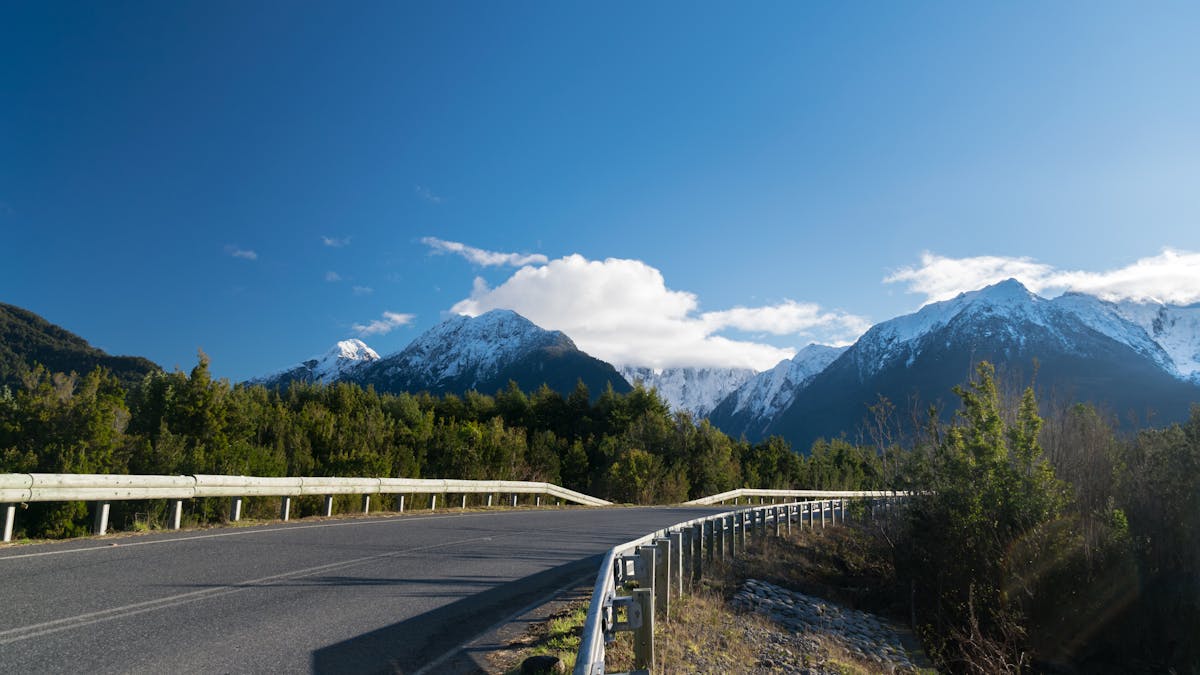
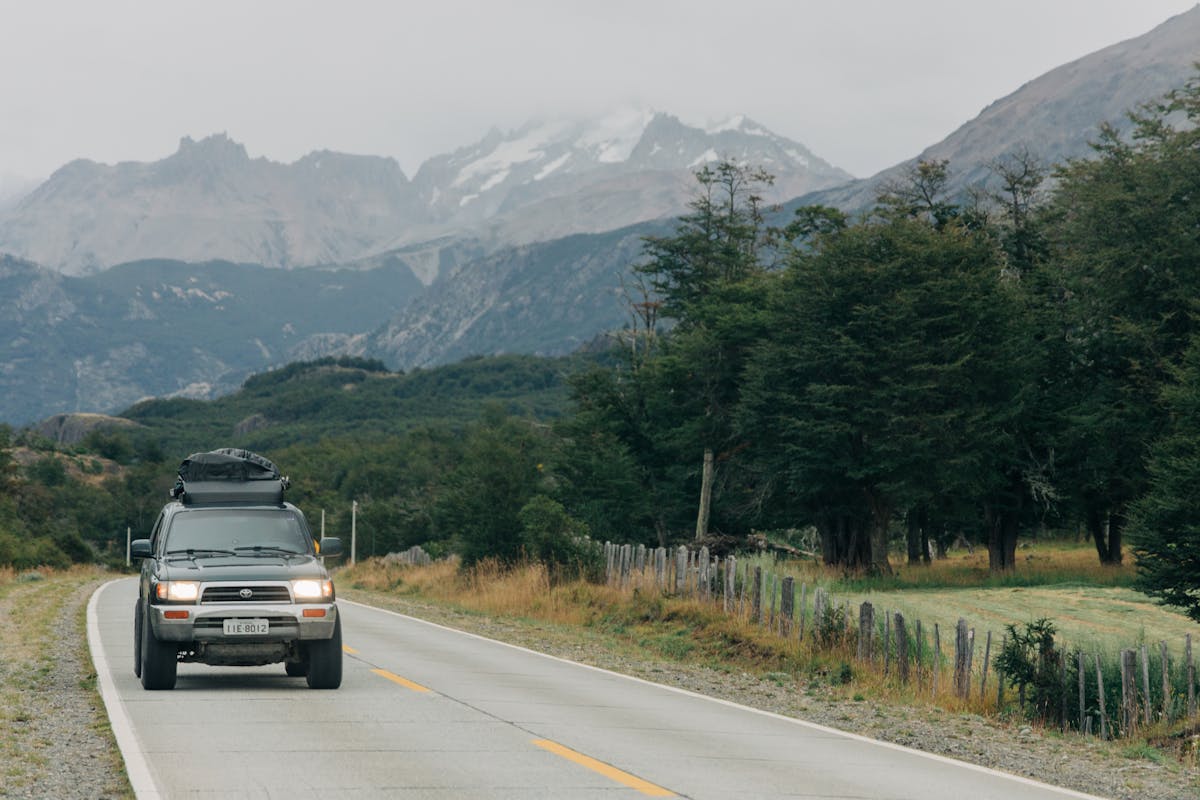
The Carretera Austral is the opposite. It runs 1,240 kilometers down Chile's side, from Puerto Montt to Villa O'Higgins, through temperate rainforest, past hanging glaciers, alongside rivers the color of antifreeze. It is tighter, slower, wetter, and far more dramatic kilometer for kilometer. I have a full guide to driving the Carretera Austral if that route interests you.
The key difference for planning: Ruta 40 is mostly paved now (though sections south of Perito Moreno town are still gravel). The Carretera Austral is still significantly unpaved — maybe 60 percent gravel in the southern sections. Ruta 40 is flat and fast but exposed to brutal crosswinds. The Carretera Austral is sheltered by mountains and forest but slow, winding, and frequently blocked by landslides or road construction.
I drove both. Ruta 40 covered more ground in less time. The Carretera Austral was the better experience. If I had to pick one, I would pick the Carretera Austral without hesitation. But honestly, the best trip combines sections of both.
Gravel Roads: The Reality Nobody Romanticizes
Let me be blunt about gravel roads in Patagonia, because travel blogs tend to gloss over this with phrases like "adventurous driving conditions." No. It is stressful, tiring, and hard on the car.
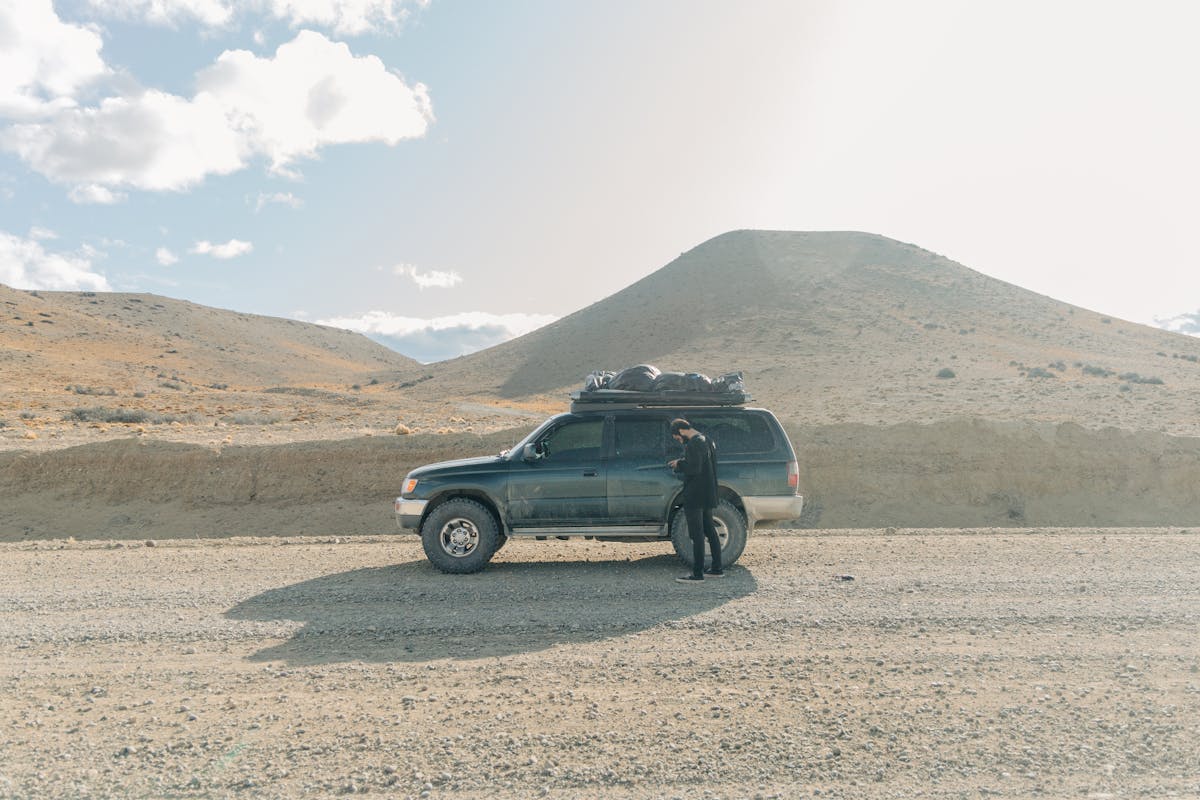
The gravel — ripio, locally — ranges from packed and smooth (rare) to corrugated washboard (common) to a dry riverbed of fist-sized rocks (more common than you would like). The washboard is the worst. At 40 km/h the vibration shakes loose everything you own, fillings included. At 80 km/h the car floats over the ridges and it gets smoother, but your stopping distance is measured in "good luck."
I averaged 50-60 km/h on gravel. A 200-kilometer stretch that looks like two hours takes three and a half. Plan accordingly.
Flat Tires (Not "If" But "When")
Every local, every rental agency, every guidebook said the same thing. You will probably get a flat. I thought they were dramatic. Day six proved them right.
Before you leave the lot: check the spare (full-size or useless donut?), confirm the jack is there, and know how to change a tire. There is no roadside assistance out here. I also carried a tire repair plug kit ($15) and a 12V air compressor. Used both.
Quick Tip
Ask for two spare tires. On longer gravel stretches, one might not be enough. Some agencies offer a second spare for a small daily fee. Take it.
Fuel Planning (The Single Most Important Thing You Will Read Here)
This is not a suggestion. This is a rule. Fill your tank at every single gas station you pass. Every one. Even if you are at three-quarters. Even if the station looks sketchy. Even if the fuel costs 20 percent more than the last town. Fill it.
On Ruta 40 between Perito Moreno and Tres Lagos, there is a 310-kilometer stretch with exactly one gas station in the middle — Bajo Caracoles, population 100. That station is not always open. It sometimes runs out. The Carretera Austral is slightly better but not by much. Between Chaiten and Coyhaique (about 400 km), fuel stops exist in La Junta and Villa Santa Lucia, but they can run dry on busy January weekends.
Carry a jerrycan. I had a 20-liter metal can in the trunk, filled it at every opportunity, used it once. That once saved the trip.
What Fuel Actually Costs
Fuel prices in Patagonia are higher than in Santiago or Buenos Aires, and they get worse the more remote you go. Expect roughly:
| Punta Arenas / Puerto Natales (Chile) | CLP 1,200-1,400/liter (~$5.20/gallon) |
| El Calafate / El Chalten (Argentina) | ARS 900-1,100/liter (~$4.80/gallon) |
| Remote stations (Bajo Caracoles, etc.) | 15-25% above city prices |
| Carretera Austral small towns | CLP 1,400-1,600/liter (~$6.00/gallon) |
Most stations take cash and credit cards, but do not count on the card machine working. Carry Chilean pesos and Argentine pesos in cash. Some of the smallest stations are cash-only.
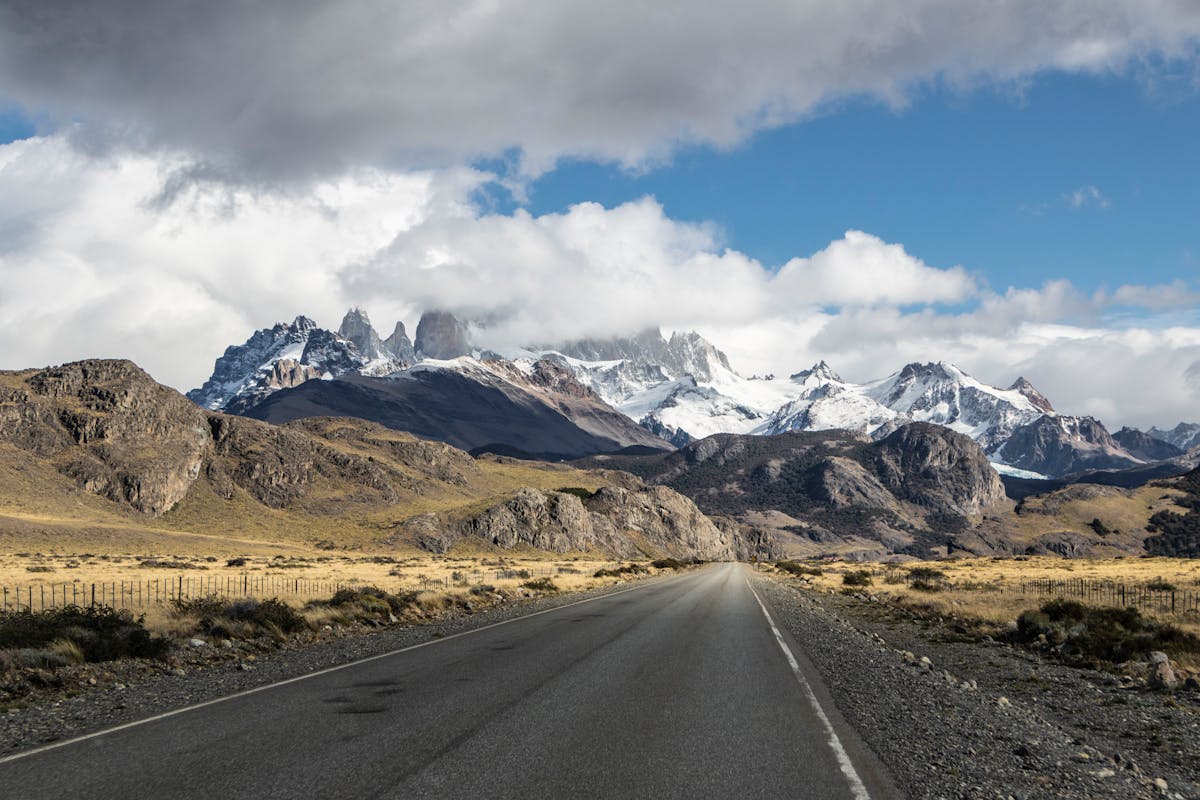
Driving in Patagonian Wind (This Section Might Save Your Life)
The wind in Patagonia is not "windy" in the way you are thinking. It is a physical force that pushes your car sideways. Sustained 80-100 km/h with gusts well above that. On the open steppe along Ruta 40, there is nothing to break it — no trees, no buildings, no hills. Just flat grassland and wind that has been building speed across hundreds of kilometers of nothing.
My worst day — Gobernador Gregores to El Chalten — I was gripping the wheel with both hands and constantly correcting. The car drifted full lanes. A gust on a bridge made me genuinely think the car would tip. It did not, but the adrenaline took an hour to wear off.
Practical tips:
- Drive early. Wind in Patagonia follows a daily pattern. Mornings are calmer. By noon it picks up. By mid-afternoon it can be brutal. I started driving at 6 or 7 am and tried to be done by 2 pm on exposed stretches.
- Grip the wheel before passing trucks. When a big truck passes you in the opposite direction, there is a moment of wind shadow where the air pressure drops, then a violent snap back as the wind hits you again from the side. It will jerk the wheel out of your hands if you are not ready.
- Open car doors carefully. The wind will rip a car door out of your hand and bend the hinges. I watched this happen to someone at a rest stop. Open doors into the wind, slowly, with your body blocking them.
- Check wind forecasts. Windy.com is your best friend. If gusts above 100 km/h are forecast, seriously consider waiting a day. The road will still be there tomorrow.
Border Crossings by Car (Chile-Argentina)
If your road trip crosses between Chile and Argentina — and most good Patagonia routes do — you will deal with border posts. There are several crossings in the region, but the most common ones for road trippers are:
- Cerro Castillo / Cancha Carrera — between Puerto Natales (Chile) and Torres del Paine toward El Calafate (Argentina). This is the busiest crossing in the area.
- Integración Austral / Monte Aymond — between Punta Arenas and Río Gallegos, further south.
- Paso Huemules / Paso Roballos — remote crossings further north on the Carretera Austral, for adventurous types only.
The process: exit stamp at one post, drive 5-15 km of no-man's-land gravel, entry stamp at the next. New vehicle inspection, food declaration.
That food declaration — take it seriously. Chile has extremely strict biosecurity rules. No fresh fruit, vegetables, meat, dairy, or honey across the border. They search your car. They have dogs. I watched a family lose an entire cooler of Argentine steaks. Eat your food before the border or throw it out.
Crossings take 30 minutes on a quiet day and two-plus hours in peak season (December-February). Cross early morning on a weekday if you can.
Quick Tip
Some border crossings close for lunch (roughly 12-2 pm) or shut entirely in bad weather. In winter (June-August), several remote crossings close for the season. Check current hours at our getting around guide or the Chilean border police (Carabineros) website before you plan a crossing time.
Speed Limits, Police, and Other Legal Realities
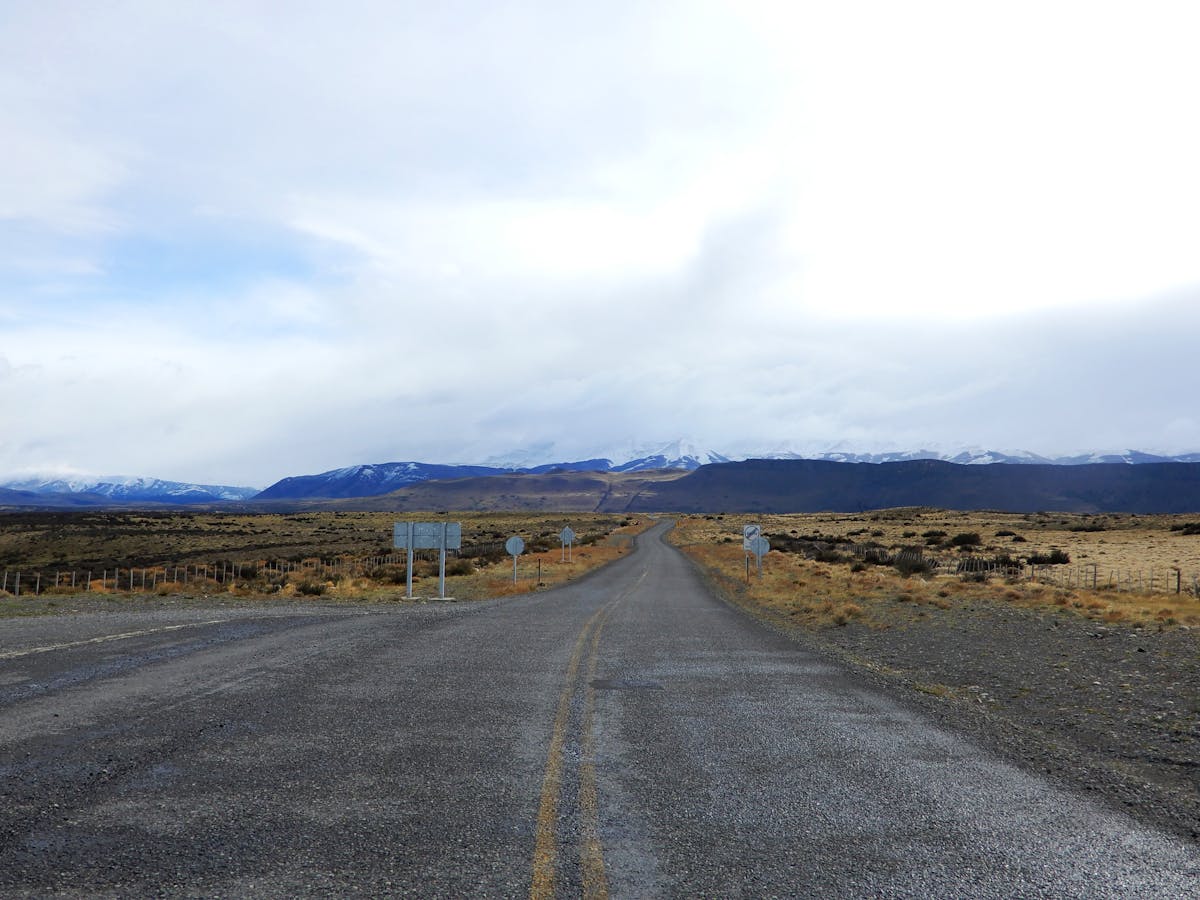
Speed limits: 120 km/h on Chilean highways, 50 in towns. Argentina: 110-130 km/h highways, 40-60 in towns. On gravel the limit is 80 but physics keeps you well below that.
Police checkpoints exist on main routes. They check documents more than speed — I was stopped twice, both quick and polite. Headlights must be on during the day in Chile (mandatory on all highways, year-round). Fines are paid at a local office, never on the spot. Any officer asking for cash is attempting a bribe — politely decline, ask for the formal ticket.
Your home license is technically sufficient, but an International Driving Permit ($20 from AAA) removes ambiguity. Worth it.
Three Road Trip Routes That Actually Work
Here are the three routes I would recommend, depending on how much time you have and what you want to see.
Route 1: The Carretera Austral (10-14 Days)
Puerto Montt to Villa O'Higgins and back. 1,240 kilometers each way, most people backtrack from Cochrane (no through-road at the end). Need 10 days minimum, 14 to enjoy it. I have a complete Carretera Austral guide with day-by-day breakdown. Highlights: Pumalin Park, Queulat hanging glacier, Marble Caves, Baker River valley. Budget $100-150/day all-in.
Route 2: The Torres del Paine Circuit (5-7 Days)
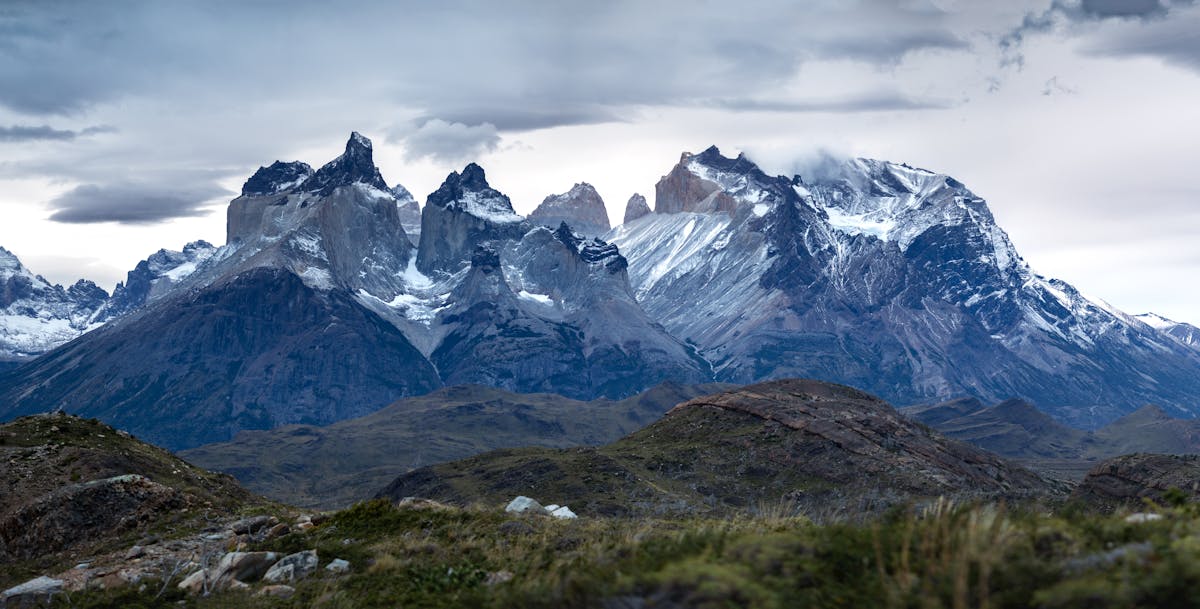
Punta Arenas to Torres del Paine to El Calafate and back. The best first trip. Rent in Punta Arenas, drive three hours north to the park, spend two-three days at Lago Grey, Salto Grande, and the base of the towers. Cross into Argentina at Cerro Castillo, day at Perito Moreno Glacier, loop back or fly out from El Calafate. See the Patagonia itinerary guide for timing.
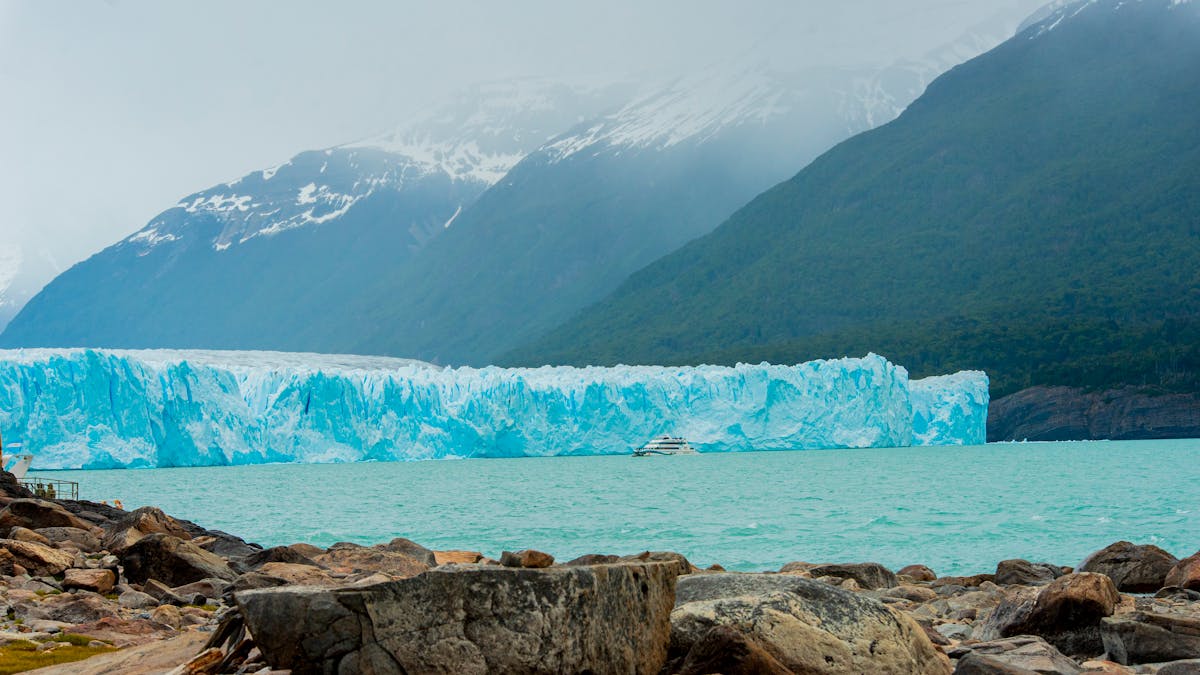
Route 3: The El Calafate to El Chalten Loop (3-5 Days)
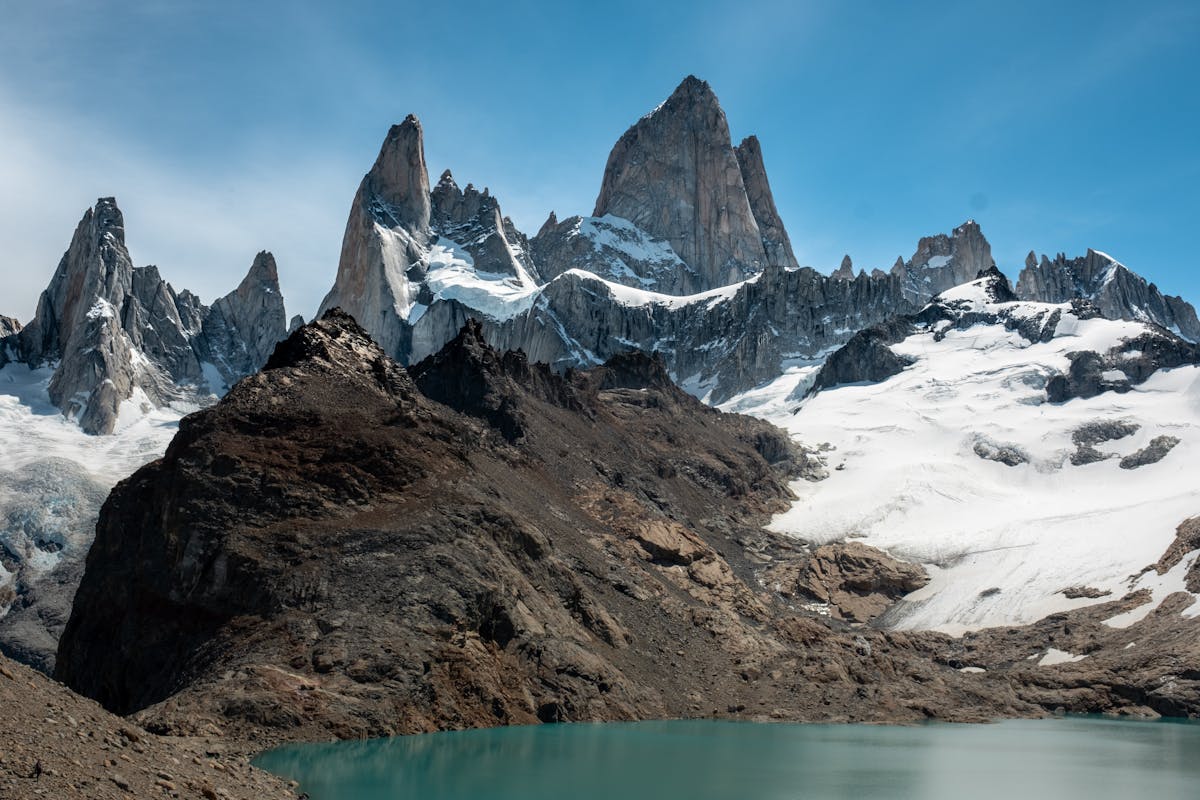
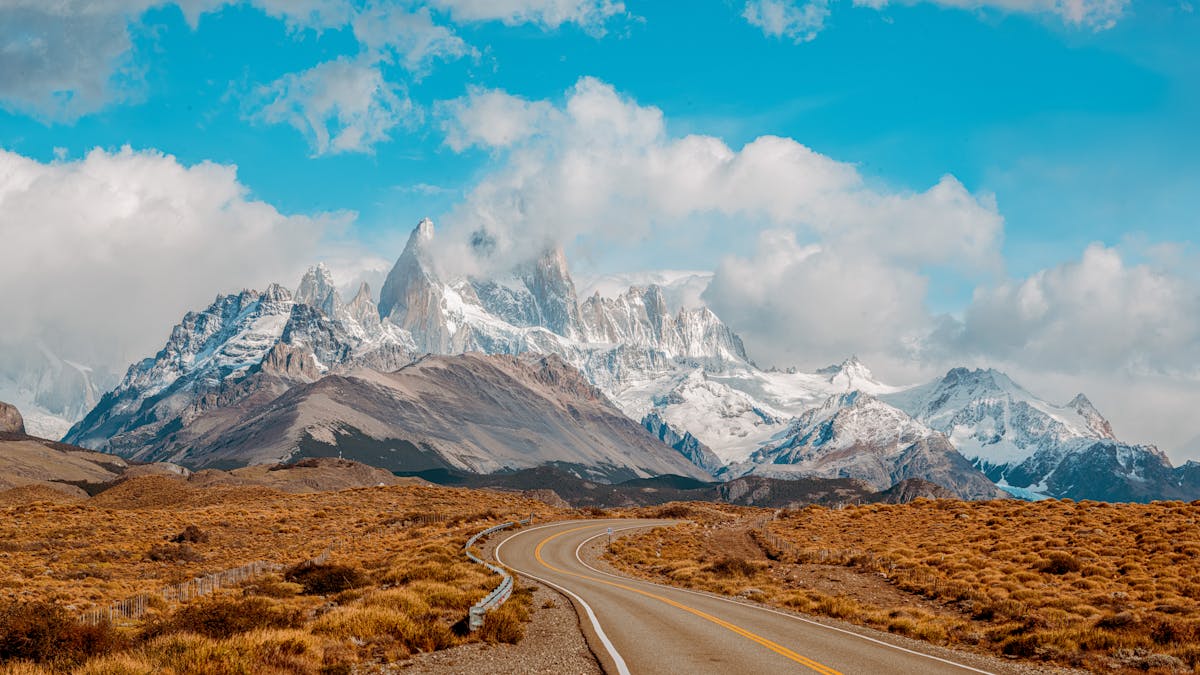
If you are short on time, this is the concentrated Patagonia hit. Fly into El Calafate. Rent a car. Day one: Perito Moreno Glacier. Day two: drive the 220 km to El Chalten, Argentina's trekking capital. Spend two days hiking — Laguna de los Tres (Fitz Roy viewpoint) and Laguna Torre at minimum. Drive back to El Calafate. Fly out. The road between the two towns is paved, flat, and scenic in a stark steppe-and-mountains way. This loop works even if you have never driven on gravel, because you do not have to.
Camping from the Car (Freedom and Freezing)
The freedom is real — pull off the road, find a spot out of the wind (the hard part), and wake up to scenery that would cost $300/night in a lodge. I camped five of twelve nights. Best mornings of the trip.
But Patagonia is cold, even in summer. Nighttime temps in December-January drop to 2-5 degrees Celsius. The wind does not stop. Your tent needs to be freestanding (staking into Patagonian gravel is a nightmare), rated for strong winds, and low-profile. My first night a pole snapped from wind at 2 am. I spent the rest of the night in the car.
Better option: sleep in the back of the SUV. Several travelers I met had removed the back seats and put a mattress in. Warmer, wind-proof, no setup time.
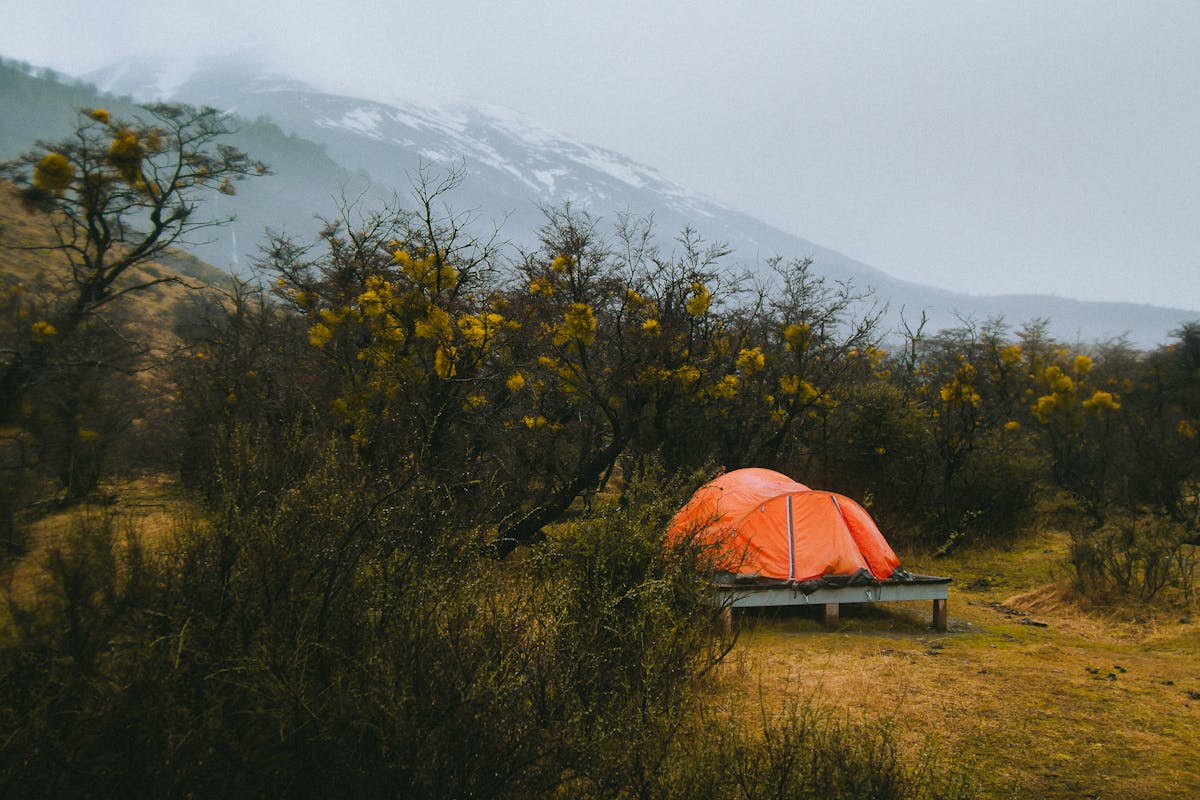
Wild camping (camping outside designated campgrounds) is legal on public land in Chile and Argentina, with the usual Leave No Trace expectations. The established campgrounds inside national parks charge CLP 5,000-15,000 per person per night in Chile and are worth it for the wind shelters, bathrooms, and sometimes hot showers. Book ahead for Torres del Paine campsites — they fill up months in advance in peak season.
GPS, Maps, and the Offline Problem
Cell service outside towns: nonexistent. I had Chilean and Argentine SIM cards and neither gave signal for 80 percent of the driving.
The fix: download offline Google Maps for the entire Magallanes (Chile) and Santa Cruz (Argentina) regions while you have WiFi. The iOverlander app marks campsites, fuel stops, and water sources offline. For the Carretera Austral, buy the physical Turistel map in Puerto Montt — it marks ferry schedules and fuel stops better than any app. My phone GPS put me on a road that did not exist. Twice. The paper map never lied.
Quick Tip
Download maps for BOTH countries before you go, even if your route stays in one. Plans change on the road.
What to Do When You Break Down in the Middle of Nowhere
Real possibility, not a hypothetical. The next town might be 150 kilometers away with no phone signal.
Rule one: stay with the car. Do not walk for help unless you can see a building. Distances are deceptive in the steppe. Wait for another vehicle — the culture here is that you stop for every breakdown, no exceptions. I stopped for three people and was stopped for once. Help was immediate every time.
Carry the basics: tow rope, jumper cables, tool kit, 5+ liters of water, warm clothing even in summer. If you break down at 4 pm and no one comes until morning, you need to survive a cold night in the car.
Best investment: a satellite communicator (Garmin inReach Mini, about $15/month subscription). Cell phones are useless out here. For the price-conscious, that $15 could be the difference between an inconvenience and an emergency.
The Full Cost Breakdown
Here is what I actually spent on a 12-day Patagonia road trip covering both Chile and Argentina sides, two people splitting costs:
| Expense | Total (12 days) | Per day |
| Car rental (SUV, full insurance) | $1,080 | $90 |
| Fuel | $420 | $35 |
| Camping (5 nights) + hostels/cabanas (7 nights) | $680 | $57 |
| Food (mix of cooking and restaurants) | $480 | $40 |
| National park entry fees | $90 | — |
| Border crossing fees / tolls | $25 | — |
| Jerrycan + tire repair kit + misc gear | $45 | — |
| TOTAL | $2,820 | $235 |
Split between two people, that is about $118 per person per day, or $1,410 per person for 12 days. Not cheap, but this is Patagonia — nothing down here is cheap. See our money and costs guide for broader Chile budgeting. For context, a guided tour covering the same ground runs $4,000-6,000 per person. Driving yourself is significantly cheaper and infinitely more flexible. Check the Patagonia budget guide for more ways to cut costs.
When to Go (Timing Changes Everything)
Driving season: October through April. Outside that, roads close, borders shut, rental inventory dries up.
December-February is peak. Best weather, longest days, but also the most expensive, crowded, and windiest (January is the worst for wind). I went in late November — reasonable weather, almost no crowds.
March-April is underrated. Wind dies down, autumn colors on the Carretera Austral are extraordinary, prices drop 20-30 percent. Shorter days, colder nights, some campgrounds closing. If you can handle that, it is the sweet spot. Tierra del Fuego gets snow earlier, so stick to November-March for the far south.
The Things I Would Do Differently
After twelve days and 3,200 kilometers, here is what I would change:
- Bigger car. My compact SUV was fine but a full-size would have been more comfortable on gravel and more stable in wind. Worth the extra $20-30/day.
- Satellite communicator. Already said it. Repeating it. Get one.
- Two more days. Twelve felt rushed. Fourteen would have let me linger in El Chalten and properly see Lago General Carrera.
- Start Argentine side. Easier roads make a better warm-up before the Chilean gravel.
- Earplugs for camping. The wind at night. All night. Earplugs.
Driving in Patagonia is not easy. It is tiring, occasionally scary, and more expensive than you budgeted for. But there is a moment — and it will come, probably on some unmarked gravel road with no one around for 50 kilometers — where you stop the car, step outside, and the only sound is wind on grass and maybe a condor overhead. The mountains are right there. The light is doing something impossible. And you realize that no bus tour, no guided excursion, no perfectly scheduled itinerary could have brought you to this exact spot at this exact moment. That is what driving Patagonia gives you. It gives you the unplanned stops. And those turn out to be the ones you remember.