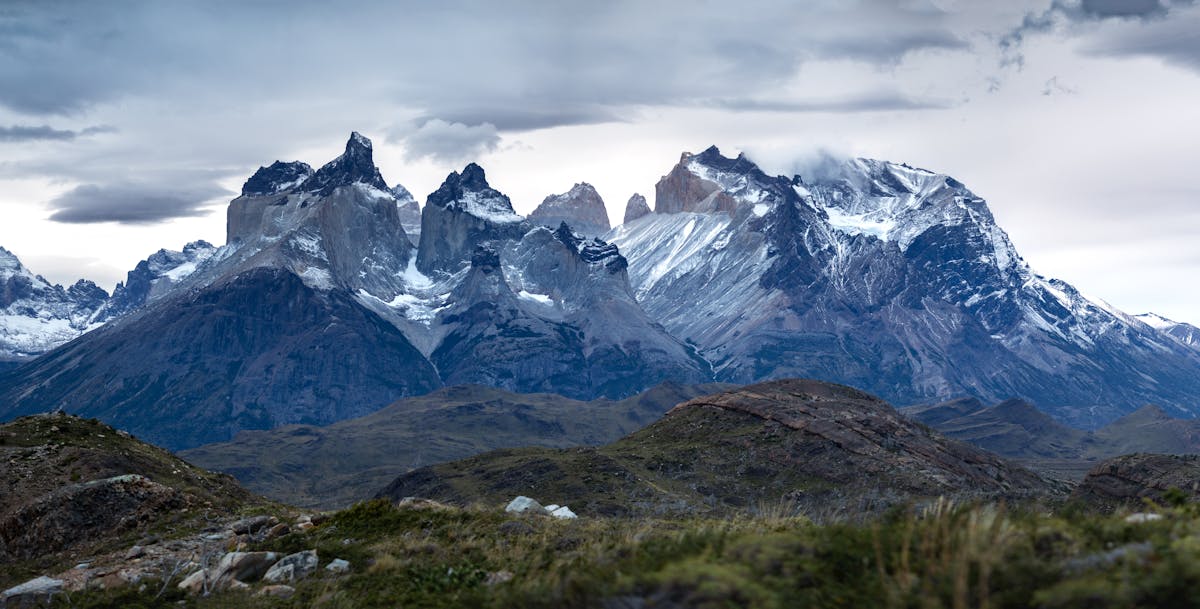
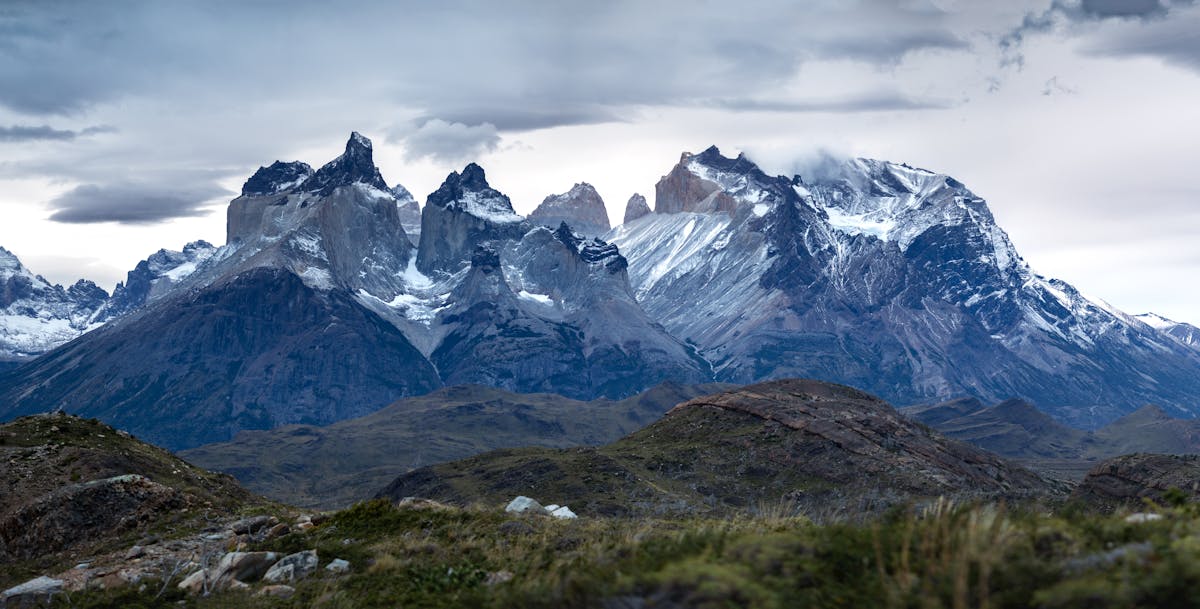
Torres del Paine is a national park in southern Chilean Patagonia — 240,000 hectares of granite towers, glaciers, turquoise lakes, and grasslands where guanacos graze against a backdrop of mountains. It is regularly listed among the most beautiful national parks in the world, and for once the hype is justified. The park draws roughly 300,000 visitors per year, most of them between December and February.
The Towers
The three granite spires that give the park its name rise vertically from the steppe to over 2,800 meters. They are visible from many points in the park, but the classic view is from the Base Torres mirador — a glacial lagoon directly below the towers. Reaching it requires a full day hike: roughly 20 kilometers round trip with 800 meters of elevation gain from the Laguna Amarga entrance, or shorter if starting from Hotel Las Torres. Start before 7am to avoid the midday crowds at the mirador.
The W Trek
The most popular multi-day route in South America. Four to five days covering three valleys in a rough W shape:
- Day 1: Base Torres — the towers viewpoint (the toughest day, best to get it done first)
- Day 2: Valle del Frances — a hanging valley between the Cuernos del Paine, with waterfalls and views of the French Glacier
- Day 3-4: Glacier Grey — a massive glacier calving into a lake full of icebergs. The Grey Glacier viewpoint trail is relatively flat and the easiest day
- Day 5: Exit via Paine Grande or boat across Lago Pehoe
Accommodation is in refugios (mountain huts with bunk beds and meals) or campsites. Refugios cost $100-150 per night including meals. Camping is $15-30 per site. Reservations are mandatory and fill up months in advance. Book through Vertice Patagonia and Fantastico Sur as soon as dates open — usually June or July for the following summer season.
The O Circuit
The full loop around the Paine Massif — seven to nine days, adding the remote backside that the W misses. The John Gardner Pass (1,241 meters) on the back section is the highlight — views over the entire Southern Patagonian Ice Field, a white expanse stretching to the horizon. The back section has camping only (no refugios) and is significantly quieter than the W. Counter-clockwise is the standard direction.
Day Visits
If you do not have time for a multi-day trek, day trips from Puerto Natales are possible (1.5 hours each way by road). Realistic day hikes:
- Salto Grande: A powerful waterfall between Lago Nordenskjold and Lago Pehoe. Easy, 1-hour round trip from the parking area.
- Mirador Cuernos: Views of the horn-shaped peaks from the north shore of Lago Nordenskjold. Moderate, 3-4 hours round trip.
- Glacier Grey viewpoint: A flat trail along the lakeshore with views of the glacier and floating icebergs. Moderate, 4-5 hours round trip from the administration center.
- Base Torres: Possible as a very long day trip (start at dawn) but better with an overnight at Campamento Chileno or Refugio Torre Central.
Wildlife
Guanacos (wild relatives of llamas) are everywhere — herds graze on the steppe and barely react to hikers. Pumas live in the park and sightings have increased in recent years as the population recovers. Dawn and dusk near Laguna Amarga and the eastern steppe offer the best chances. Several specialized puma tracking tours operate from Puerto Natales. Condors circle the valleys, and rheas (South American ostriches) run across the grasslands.
Weather
Four seasons in one day is a cliché about Patagonia, but it is accurate. Sun, rain, hail, and gale-force wind can cycle through in a few hours. Wind is the biggest factor — it blows relentlessly from the west and can reach speeds that make walking difficult. The best weather tends to be in January-February, but even then you should expect rain on most days.
Pack waterproof layers (jacket and pants), warm base layers, a hat that will not blow off, gloves, and sunglasses. Sunburn is a risk even in overcast conditions — the UV index is high at this latitude.
Park Entry
Entrance tickets must be purchased in advance through the CONAF online system. Foreign adults pay approximately $35 (prices change annually). The ticket is valid for a single entry — if you leave the park during a multi-day trek (some W Trek routes exit and re-enter), check whether your ticket covers re-entry.
Getting There
The park is about 1.5 hours by road from Puerto Natales. Buses run several times daily in summer (roughly $10 each way). Car rental is useful for flexibility but roads inside the park are gravel. The nearest airport is Punta Arenas (PUQ), three hours from Puerto Natales by bus.
Some visitors enter from the Argentine side via El Calafate, combining Torres del Paine with Perito Moreno Glacier in a single trip.
Tip: Book Early, Really Early
Refugio and campsite reservations for the W Trek in January-February sell out within days of opening. Set a calendar reminder for when bookings open (typically June-July) and book immediately. Shoulder season (October-November, March-April) is easier to get and has fewer crowds, though some refugios may be closed.